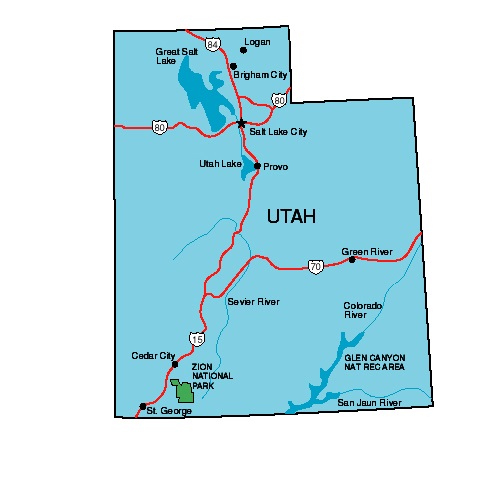
Category Archives: Utah

June 2, 2014

Disabled Employee Not Entitled to Additional Leave as Reasonable Accommodation

Biggs_JBy Jude Biggs 

After Kansas State University denied her request to extend a leave of absence for longer than six months, assistant professor Grace Hwang, who suffers from cancer, filed suit against the University alleging disability discrimination and retaliation under the Rehabilitation Act.  The Tenth Circuit Court of Appeals ruled that the University had not violated the Rehabilitation Act because Ms. Hwang could not show that she was able to perform the essential functions of her job.   In addition, the Tenth Circuit held that requiring the University to extend the six-month’s leave was not a reasonable accommodation.  Hwang v. Kansas State Univ., No. 13-2070 (10th Cir. May 29, 2014). 

Policy Provided Six-Month’s Paid Leave of Absence 

Ms. Hwang was set to teach classes at Kansas State University under a one-year contract that covered all three academic terms — fall, spring and summer.  Before the fall term, Ms. Hwang was diagnosed with cancer. She asked for a leave of absence to seek medical treatment.  The University granted her a paid six-month leave under its regular policy which capped the length of a leave at six months.  

As the six-month leave was coming to an end, Ms. Hwang’s doctor advised her to seek more time off of work.  She asked the University to extend her leave through the end of the spring semester, intending to return before the summer term.  The University refused to extend her leave but instead arranged for Ms. Hwang to receive long-term disability benefits, effectively ending her employment with the University. 

Ms. Hwang sued the University in federal court alleging that the University’s denial of her request for extended leave constituted disability discrimination under the Rehabilitation Act.  The Rehabilitation Act prohibits disability discrimination by entities that receive federal funds, such as Kansas State.  29 U.S.C. § 794(a).  The federal district court dismissed her lawsuit on a motion to dismiss (before any discovery was done), and Ms. Hwang appealed to the Tenth Circuit Court of Appeals, which covers the states of Colorado, Utah, Wyoming, Kansas, Oklahoma and New Mexico. 

Extended Leave Not A Reasonable Accommodation Under Rehabilitation Act  

The University did not dispute that Ms. Hwang was a capable teacher and that her cancer rendered her disabled as defined by the Rehabilitation Act.  The central issue in the appeal was whether the University was required to ignore the six-month time limit in its leave policy to extend Ms. Hwang’s leave of absence beyond six months. The Court said no.  Because Ms. Hwang wasn’t able to work for an extended period of time, she was not capable of performing the essential functions of her job.  In addition, requiring the University to keep her job open for that extended period of time did not qualify as a reasonable accommodation.  The Court wrote: “[a]fter all, reasonable accommodations – typically things like adding ramps or allowing more flexible working hours – are all about enabling employees to work, not to not work.” 

The Court noted that a “brief absence from work” for medical care may be required as a reasonable accommodation, as it likely allows the employee to continue to perform the essential functions of the job.  Determining how long employers must provide for leave as a reasonable accommodation depends on factors such as the duties essential to the job in question, the nature and length of the leave sought and the impact of the leave on co-workers.  That said, the Court stated that it would be difficult to find a six-month leave of absence in which the employee performs no work (e.g., no part-time hours or work from home) reasonable in any job in the national economy today.  Ms. Hwang’s terrible problem, in the Court’s view, was one other forms of social security aim to address.  In addition, the Court noted that the aim of the Rehabilitation Act is to prevent employers from denying reasonable accommodations that would allow disabled employees to work, not to turn employers into a “safety net” for those who cannot work. 

“Inflexible” Six-Month Leave Policy Not Inherently Discriminatory 

Ms. Hwang asserted that the University’s “inflexible” sick leave policy that capped the maximum length of sick leave at six months violated the Act.  She cited the EEOC’s guidance manual which states that if a disabled employee needs additional unpaid leave as a reasonable accommodation, the employer must modify its “no-fault” leave policy to provide the additional leave, unless the employer can show that there is another effective accommodation that would allow the individual to perform the essential functions of her job, or that granting additional leave would cause the employer an undue hardship.  The Court, however, pointed to another section of the EEOC’s guidance manual to counter Ms. Hwang’s argument, as the EEOC manual states “ . . . six months is beyond a reasonable amount of time.”  In fact, the Court stated that an “inflexible” leave policy can actually help protect the rights of disabled employees rather than discriminate against them because such a policy does not permit individual requests for leave to be singled out for discriminatory treatment. 

Not all leave policies will past muster, however.  The Court stated that policies that provide an unreasonably short sick leave period may not provide enough accommodation for a disabled employee who would be capable of performing his or her job with just a bit more time off.  Alternatively, policies that are applied inconsistently, such as where some employees are allowed more time off and others are held to a strict time limit, could be discriminatory.  In this case, however, the Court found that Ms. Hwang did not allege any facts to support a claim that she was treated differently than other similarly situated employees. 

Retaliation Claim Fails As Well 

Ms. Hwang also asserted that she was unlawfully retaliated against for reporting disability discrimination.  In particular, she based her claims on two theories : (1) the University failed to explain her COBRA health benefits before or immediately after her termination; and (2) she wasn’t hired for two other positions at the University that she applied for after losing her teaching job.  The Court easily dispensed with both theories. 

First, COBRA allows thirty days for an employer to provide separating employees with a COBRA notice.  Consequently, the University was not required to provide Ms. Hwang with notice of her COBRA benefits before or immediately after her termination of employment.  Second, although Ms. Hwang alleged that she was not hired for two other University positions for which she applied, she failed to allege any facts suggesting that the University’s decision not to hire her was because she had engaged in legally protected opposition to discrimination.  She not only failed to provide facts showing that she was qualified for the two jobs, but she also failed to offer facts suggesting that the University officials who decided not to hire her knew about her disability and her complaint about disability discrimination.  Without such allegations, the Court ruled that Ms. Hwang’s retaliation claim failed. 

ADA Application 

Although this case alleged a violation of the Rehabilitation Act, courts typically analyze such claims similarly to those alleging a violation of the Americans With Disabilities Act (ADA).  Consequently, this case may prove helpful to employers defending ADA claims where the employer denies an employee’s request for an extended leave of absence.  Employers should heed the Court’s warning about leave policies that may be discriminatory if they provide an unreasonably short leave or are inconsistently applied.  However, lengthy leaves of six months or more, or leaves of an unlimited duration in which the disabled employee provides no work, will likely not be considered a reasonable accommodation.

Click here to print/email/pdf this article.

May 6, 2014

Separation Agreements Targeted By EEOC Again

Wiletsky_Mark_20090507_NM_crop_straightBy Mark Wiletsky 

The Equal Employment Opportunity Commission (EEOC) recently filed a lawsuit seeking to stop a Colorado employer from using its form separation and release agreement and to allow employees who have signed the form agreement to file charges of discrimination and participate in  EEOC and state agency fair employment investigations.  In its federal court complaint, the EEOC alleges that CollegeAmerica Denver violated the Age Discrimination in Employment Act (ADEA) by conditioning employees’ receipt of severance benefits on signing a separation and release agreement which, according to the EEOC, chills and interferes with the employees’ rights to file charges and/or cooperate with the EEOC and state fair employment practice agencies.  

As we wrote on this blog earlier, the EEOC has been scrutinizing employers’ separation agreements.  This is the second such lawsuit challenging language in the separation agreements that does not permit the filing of discrimination or retaliation charges with the EEOC or other government agencies.  As in the EEOC’s earlier complaint against a national pharmacy, the recent complaint against CollegeAmerica Denver targets numerous provisions in the separation agreement, including the release of claims, a non-disparagement clause and provisions in which the employee represents that he/she has not filed any claims, has disclosed to the company all matters of non-compliance and will continue to cooperate with and assist the company with any investigation or litigation.  

Many of the targeted provisions are standard clauses in form separation agreements.  Although it remains to be seen whether the courts will agree with the EEOC’s claims, it is always a good idea for organizations to review their agreements and ensure they do not raise any red flags for the EEOC while still protecting the company from future payouts for employment-related claims.  We will continue to provide updates as new developments arise.

Click here to print/email/pdf this article.

April 3, 2014

Severance Payments Are Wages Subject to FICA Tax

By Arthur Hundhausen and Mark Wiletsky 

Employers offer severance payments to separating employees for numerous reasons, including rewarding long-time employees affected by a plant closure, to maintain goodwill, to secure a release and waiver of existing or potential claims, or to comply with company policies or agreements that require such payments.  But whether the severance is dictated by policy or an individually-negotiated benefit, one sticky issue that employers may neglect to address is whether severance payments are subject to FICA taxes. The U.S. Supreme Court recently settled that issue by confirming that severance payments made to employees terminated against their will are taxable wages under FICA.  United States v. Quality Stores, Inc., No. 12-1408, 572 U.S. ___ (2014).  The Supreme Court’s ruling was consistent with the longtime IRS historical position on this issue. 

Involuntary Terminations Due to Bankruptcy Triggered Severance Payments 

Quality Stores terminated thousands of employees in connection with its involuntary Chapter 11 bankruptcy filing in 2001.  The employees received severance payments under one of two plans, ranging from six to eighteen months of severance pay.  Initially, Quality Stores reported the severance payments as wages for FICA purposes on the Forms W-2 filed with the IRS and the employees.  Consistent with such reporting, Quality Stores paid the employer’s required share of FICA taxes and withheld the employees’ share of FICA taxes as well.  Quality Stores then decided to file FICA tax refund claims with the IRS, totaling over $1 million in paid FICA taxes.  The IRS neither allowed nor denied the refund claims, so Quality Stores sought a refund as part of its bankruptcy proceeding.  Both the District Court and the Sixth Circuit Court of Appeals concluded that severance payments were not “wages” under FICA, meaning Quality Stores and its affected employees were entitled to a refund of the FICA taxes paid.  

The Sixth Circuit’s decision, however, directly contradicted rulings by other Courts of Appeals, which concluded that at least some severance payments constitute “wages” for purposes of FICA taxes. The U.S. Supreme Court agreed to review the issue to resolve the split among the courts. 

FICA’s Broad Definition of Wages Includes Severance Payments 

FICA defines wages as “all remuneration for employment, including the cash value of all remuneration (including benefits) paid in any medium other than cash.”  Under the plain meaning of this definition, the Court found that severance payments made to terminated employees constitutes “remuneration for employment.”  The Court noted that severance payments are made to employees only, often will vary depending on length of service, and are made in consideration for past services in the course of employment.  

Looking at statutory history, the Court noted that in 1950, Congress repealed an exception from “wages” for “[d]ismissal payments which the employer is not legally required to make” from the Social Security Act and since that time, FICA has not excepted severance payments from the definition of “wages.”  Agreeing with the government’s position in the case, the Court ruled that severance payments are taxable wages for FICA purposes. 

Implications for Employers 

The Court’s ruling confirms that employers are obligated to pay their portion of FICA taxes and withhold the employees’ portion of FICA taxes from severance payments.  Depending on the amount of the severance at issue, this FICA obligation can greatly change the total payout amount for the employer.  It also can catch unknowing employees off guard if they are expecting to receive a higher severance payment without FICA taxes being withheld.  Employers should factor the FICA tax obligation into any severance offer to ensure that both the company and the separating employee understand the total amount that is at issue and the final amount that the employee will receive.  In addition, employers offering severance payments should review their policies and practices to ensure that proper tax payments are made.  

If employers identify past severance payments where no FICA taxes were paid or withheld, such employers should consult with their tax counsel to determine whether any corrective steps are required.  In general, the applicable statute of limitations for an employer’s payroll tax liability begins on April 15 of the year following the year in which wages are paid (when prior year payroll tax returns are “deemed” to be filed), and expires after three years.  For example, the applicable statute of limitations for payroll taxes owed for 2010 began on April 15, 2011 and expires on April 15, 2014.

Click here to print/email/pdf this article.

March 13, 2014

Harassment Training for Supervisors is Key in Minimizing Risk

By Mark Wiletsky 

Most employers today have policies prohibiting harassment.  But if your supervisors and employees are not trained on those policies, and if harassment is allowed to occur, your organization could face significant liability.  

Female Bailiff Alleges Egregious Sexual Harassment By Her Supervisor 

Camille Kramer was employed as a jailor and later as a bailiff by the Wasatch County Sheriff’s Department.  While working at the jail, male co-workers allegedly made offensive comments about Kramer’s breasts, she was subjected to sexually explicit materials on work computers and had to listen to graphic sexual conversations.  Kramer complained to Sheriff Kenneth Van Wagoner, the head of the Sheriff’s Department.  Sheriff Van Wagoner said he’d “take care of it” and proceeded to call a staff meeting at which he used Kramer as a volunteer to act out the exact harassing scenarios that she had reported to him.  Van Wagoner told the group: “[t]hat’s harassment. Don’t do it.”  When the harassment got worse after the meeting, Kramer complained again to the Sheriff, who told her she might want to avoid that area. 

Kramer transferred to the courthouse to work as a bailiff.  Sergeant Rick Benson, also a bailiff, supervised both Kramer and one other bailiff. According to Kramer, Benson subjected Kramer to a campaign of sexual harassment and sexual assault that ranged from demanding foot rubs to groping and rape.  Kramer did not report Benson’s conduct to the Sheriff because Benson threatened her job if she said anything and she believed nothing would be done about it anyway. 

Later, Kramer told female co-workers about the rape and assault. She also told them that she was having a consensual affair with another man and was pregnant from that relationship.  Sheriff Van Wagoner found out about Benson’s sexual assault of Kramer and her pregnancy from one of Kramer’s co-workers.  He assigned a detective who was not trained in human resources or in conducting sexual harassment investigations to look into the misconduct.  The detective focused his investigation exclusively on finding out who fathered Kramer’s baby, not on Benson’s conduct.  When it was learned that Kramer was involved with a married county firefighter, the detective urged Kramer to resign and Kramer was disciplined with her certification suspended for six months for “actions unbecoming an officer.”  Although the Sheriff decided to terminate Benson, Benson resigned before that could happen.  

Benson directly supervised Kramer’s work as a bailiff.  He wrote her performance evaluations, which could cause her to be promoted, demoted or fired.  He could create a corrective action plan for her which might include transfer, reassignment or separation, if he deemed her performance was substandard. At all times, however, the Sheriff was the final decision-maker and the only person who had the actual authority to take tangible employment actions against Kramer. 

Kramer sued the County and the Sheriff for sexual harassment in violation of Title VII, among other claims.  The district court granted summary judgment to the County, holding that because Benson did not have the actual authority to unilaterally fire Kramer, the County could not be vicariously liable for Benson’s conduct.  It also ruled that supervisor status could not be based on Benson having apparent authority over Kramer because no reasonable juror could find that Kramer reasonably believed that Benson had the power to fire her.  On appeal, the Tenth Circuit Court of Appeals reversed the grant of summary judgment in favor of the County and remanded the case to the trial court for further proceedings. Kramer v. Wasatch Cty. Sheriff's Office, No. 12-4058 (10th Cir. Feb. 25, 2014).

Delegation of Power and Apparent Authority 

The Tenth Circuit pointed to wording in the Supreme Court’s recent case, Vance v. Ball State, 570 U.S. ___ (2013), to determine whether the County could be vicariously liable for Benson’s conduct.   Vance held that a “supervisor” for purposes of determining employer liability for workplace harassment under Title VII includes only those individuals who have the authority to take tangible employment actions against the victim.  Although that seemed like a bright-line test, the Tenth Circuit stated that if Benson had or appeared to have the power to take or substantially influence tangible employment actions or used the threat of taking such actions to subject Kramer to a hostile work environment, then the County could be vicariously liable for Benson’s severe or pervasive sexual harassment.  Because the Court found sufficient evidence in the record that raised genuine issues of fact as to whether the Sheriff effectively delegated to Benson the power to cause tangible employment actions by relying on Benson’s recommendations and performance evaluations when making decisions regarding firing, promotion, demotion and reassignment, the Court reversed the grant of summary judgment to the County.  The Court stated that even if the Sheriff took some independent analysis when considering input from Benson on employment decisions, Benson could qualify as a supervisor if his recommendations were among the proximate causes of the Sheriff’s decision-making.  The Court also found that there was evidence to suggest that Kramer reasonably believed that Benson had the power to take tangible employment actions against her meaning Benson qualified as a supervisor under apparent authority principles.  

No Tangible Employment Actions 

If Benson is a supervisor under the definition established in Vance, the County would be strictly liable for Benson’s harassment if it resulted in a tangible employment action.  Kramer asserted that four actions constituted tangible employment actions.  First, she argued that Benson’s rape was a tangible employment action.  The Court disagreed, stating that while the rape was inarguably a severe form of sexual harassment, Benson did not commit the rape in an official company action.  Next, Kramer asserted that Benson prepared a negative performance evaluation of her and argued that was a tangible employment action.  However, Benson improved the evaluation after speaking with Kramer and before submitting it to the Sheriff, so even though the threatened poor evaluation contributed to a hostile work environment, it did not constitute a tangible employment action.  The Court similarly rejected the final two alleged employment actions, a denial of leave time and assigning Kramer to an unfavorable duty that denied her the training needed for a promotion.  The Court found that the loss of one day’s leave time was not a “significant” change in Kramer’s benefits and the assignment to an unfavorable duty did not have a deleterious economic consequence for Kramer or reduce her opportunity for advancement.  Finding that Kramer did not suffer a tangible employment action, the Court remanded for consideration of whether the County established the Faragher/Ellerth defense. 

Teachable Moments from the Tenth Circuit 

The Court’s thorough discussion of Benson’s conduct and what the Sheriff did/did not do when he learned of potential misconduct reveals many teachable moments for employers.  First and foremost, make sure to train your supervisors and employees on prohibited forms of harassment, and how important it is to promptly and appropriately address issues when they arise.  For example, when an employee reports harassing behavior, as Kramer did when she first worked at the jail, take it seriously.  Do not simply tell workers to “stop it” or tell the person who complained to “avoid the area” or stay away from the perpetrators.  Make sure that the person conducting the investigation is trained in workplace harassment investigations.  Do not focus the investigation solely on the potential wrongdoing of the complaining party, as the detective did when trying to determine the father of Kramer’s baby.  Talk to all parties implicated in the misconduct, including any witnesses who may have knowledge of the hostile work environment.  If the investigation reveals harassing behavior, take immediate steps to correct it and prevent it from happening again.  Follow up with the person who reported it to make certain your corrective actions are effective and that no further incidents have occurred. And finally, do not retaliate against the complaining employee.  Learning from these missteps will go along way in minimizing your risk of harassment liability.

Click here to print/email/pdf this article.

March 10, 2014

Safety Violation Or Too Much Intermittent FMLA Leave? Tenth Circuit Says Jury Must Decide Wyoming Employee’s FMLA and ADA Case

By Brad Cave 

Did Solvay Chemicals fire long-time employee Steven Smothers because of a first-time safety violation or because the company was tired of his frequent absences due to an ongoing medical disability?  The Tenth Circuit Court of Appeals recently ruled that Smothers provided sufficient evidence to suggest that Solvay’s stated reason for his termination was pretextual, allowing his claims for unlawful retaliation under the Family and Medical Leave Act (FMLA) and discrimination under the Americans with Disabilities Act (ADA) to proceed.  Smothers v. Solvay Chem., Inc., No. 12-8013 (Jan. 21, 2014).  The Court affirmed the grant of summary judgment on his state law claim for breach of an implied employment contract. 

Medical Treatments and Severe Pain Lead to Frequent FMLA-Protected Absences 

For eighteen years, Smothers worked as a surface maintenance mechanic in Solvay’s trona mine in Sweetwater County, Wyoming. The company considered him to be an excellent mechanic who did great work and got along with everyone.  In 1994, Smothers injured his neck and developed degenerative disc disease in his spine.  Over the next five years, Smothers had three surgeries to his neck as well as numerous other medical procedures.  Despite treatment by a specialist, Smothers continued to have severe ongoing neck pain, severe migraine headaches and lower back problems.  At times, Smothers was unable to work without pain treatments and he often was able to sleep only a few hours each night due to the pain. 

Smothers asked for and was granted FMLA leave for intermittent absences caused by his condition.  Managers and co-workers began to complain about his absenteeism, especially because he worked on the graveyard shift where there were fewer workers to absorb his absences resulting in increased overtime costs.  Solvay’s production superintendent Melvin Wallendorf pressured Smothers to change to the day shift, but Smothers refused as the shift change would have cost him about $7,000 a year.  Solvay’s human resources department advised Wallendorf that urging Smothers to switch shifts would violate the FMLA so Wallendorf stopped pressuring Smothers but did not stop complaining about his absences. 

At one point, Wallendorf and Rick Wehrle, Smothers’ direct supervisor, gave Smothers a poor performance rating on his evaluation due to his absenteeism.  In 2005 or 2006, Smothers applied for a promotion but was told that he was rejected because of his absences. 

Safety Issue Explodes into Argument 

In 2008, the graveyard crew conducted a routine maintenance acid wash to remove build up in its equipment.  After a line ruptured, Smothers saw that a damaged “spool piece” had caused the problem and prepared to remove it.  Another mechanic, Dan Mahaffey, suggested that Smothers wait for a line break permit, which is a form that certifies that employees have completed a checklist of precautions before a line can be safely disconnected.  Smothers said that a permit wasn’t required because the line was already broken.  Mahaffey and Smothers then argued.  Mahaffey offered help on the repair which Smothers refused.  Mahaffey took offense and accused Smothers of hypocrisy since Smothers had previously reported others for safety violations.  Smothers made an offensive comment to Mahaffey and told him he did not want his kind of help.  Smothers removed the broken piece and began the repair.  

Mahaffey immediately reported the argument and Smothers’ removal of the spool piece without a line break permit to the area supervisor.  Later that same day, three managers called Smothers in to discuss the safety violation.  Although completing the line break permit may not have been absolutely necessary, Smothers later conceded that he should have locked out the pump valve before removing the part according to Solvay’s safety policies. Smothers apologized for not locking the pump valve before removing the piece and promised it wouldn’t happen again.  Smothers was sent home pending an investigation.  

Six managers were involved in deciding what to do about the argument and the safety violation.  Three of the managers personally talked with Mahaffey about the argument but no one spoke to Smothers about it.  About eight days later, Solvay fired Smothers.  Smothers sued in Wyoming federal court, alleging, among other claims, unlawful FMLA retaliation, ADA discrimination and breach of an implied employment contract based on Solvay’s employee handbook. 

FMLA Claim Bolstered By Disparate Treatment and Previous Retaliatory Acts 

The trial court granted summary judgment to Solvay on Smothers’ FMLA and ADA claims.  On appeal, the Tenth Circuit decided that Smothers presented enough evidence for a trial about whether Solvay’s real reason for his termination was his use of FMLA leave or his disability.  Smothers provided evidence that other employees who committed similar safety violations were not fired.  Five of the six decision-makers who fired Smothers were also involved in at least one decision in which a similarly situated employee was treated more favorably after violating the same or comparable safety rules.  Smothers also pointed to the negative comments, negative performance rating, failure to promote and pressure to change shifts because of his FMLA-protected absences as evidence that the safety violation was a pretext for firing him for his FMLA leave.  Moreover, Smothers showed that the decision-makers had failed to sufficiently investigate the argument he had with Mahaffey, basing their decision almost entirely on Mahaffey’s version of events.  The Court decided that a reasonable jury could find that Solvay’s investigation into the quarrel was not fair or adequate.  Based on this evidence, the Court found that there were issues of fact on whether Solvay’s termination reasons were pretextual and reversed the dismissal of Smothers’ FMLA retaliation claim. 

Smothers Was Disabled Under ADA 

Smothers also asserted that his firing was in violation of the ADA.  He presented evidence that his medical condition was an impairment that substantially limited a major life activity, specifically his ability to sleep.  Because the facts would allow a reasonable jury to conclude that Smothers’ sleep was substantially limited, Smothers satisfied his burden of establishing a prima facie case of disability discrimination.  As with the FMLA claim, the Court found sufficient evidence that Solvay’s stated termination reasons may have been a pretext for disability discrimination. Therefore, the Court reversed the dismissal of Smothers’ ADA claim as well. 

No Breach of Implied Contract Based on Employee Handbook 

Smothers also alleged that Solvay violated the terms of its employee handbook, giving rise to a claim for breach of implied contract under Wyoming law.  The Court disagreed.  Wyoming recognizes a claim for breach of implied contract if an employer fails to follow its own required procedures, such as the procedures laid out in an employee handbook.  Solvay’s handbook contained a four-step progressive disciplinary process, with termination as the last step.  But it also contained a provision that allowed Solvay to terminate an employee immediately for a serious offense, including a safety violation.  Because the discipline policy unambiguously gave Solvay the discretion to fire employees who violate safety rules, the Court found that Solvay’s decision to terminate Smothers for violating a safety rule did not violate the terms of the employee handbook.  Therefore, the appeals court upheld the trial court’s dismissal of Smothers’ breach of implied contract claim. 

Back To Court They Go 

We don’t know whether Smothers or Solvay will prevail if this case goes to trial but we do know that the appellate court thought that some of the evidence about the actions of Solvay managers could demonstrate that Solvay acted with a discriminatory motive:   

  • Supervisors and co-workers gave Smothers a hard time about taking FMLA-protected leave.
  • Solvay failed to properly investigate all sides in the quarrel, accepting one employee’s version of events as fact.
  • The decision-makers treated Smothers more harshly than other similarly-situated employees who had violated similar safety rules.
  • Managers and supervisors considered Smothers’ FMLA absences when providing his performance evaluation and rejecting him for a promotion.  

Evidence of these actions prevented Solvay from obtaining a grant of summary judgment on appeal. While Solvay may dispute Smothers’ evidence when the case actually goes to trial,  this case stands as a lesson about the kinds of supervisory comments and actions that can feed into a discrimination claim, and a good reminder of how carefully employers must manage employees with injuries or disabilities.

Click here to print/email/pdf this article.

March 6, 2014

SOX Whistleblower Protection Extends to Employees of Private Contractors, According to Supreme Court

WhistleblowerBy Jude Biggs and Jeff Johnson 

On March 4, 2014, the U.S. Supreme Court ruled that employees of private contractors and subcontractors who contract with public companies are protected under the whistleblower provisions of the Sarbanes-Oxley Act of 2002 (SOX).  Lawson v. FMR LLC, 571 U.S. ___ (2014).  The ruling means that private employers who have a contract with a public company may not retaliate against their employees who report a potential fraud.  As pointed out in the dissenting opinion, the holding by the six-justice majority creates the potential for increased litigation as it offers private sector employees another avenue to bring retaliation claims.  In addition, it implies private sector employers with such contracts may need to strengthen their corporate compliance and complaint procedures to discover and fix problems early. 

Whistleblowers Reported Potential Fraud In Mutual Fund Operations 

Two former employees of private companies that contracted to advise and manage mutual funds filed separate administrative complaints alleging retaliation under 18 U.S.C. §1514A, the whistleblower provision of SOX.  The mutual funds themselves were public companies, but they did not have any employees.  Instead, the funds contracted with private companies to handle the day-to-day operation of the funds, including making investment decisions, preparing reports for shareholders and filing reports with the Securities and Exchange Commission (SEC).  

Jackie Hosang Lawson was the Senior Director of Finance for a private advisory firm that contracted to provide services to the Fidelity family of mutual funds.  Lawson alleged that she suffered a series of adverse employment actions that resulted in her constructive discharge after she raised concerns about certain cost accounting methods being used with the funds.  She alleged that she believed that expenses associated with operating the funds were being overstated. 

The second petitioner, Jonathan M. Zang, was a portfolio manager for a different division of the company that advised Fidelity mutual funds.  Zang alleged that he was fired after he expressed concerns about inaccuracies contained in a draft SEC registration statement concerning some of the mutual funds.  

After pursuing their administrative complaints, both whistleblowers filed retaliation lawsuits under §1514A in federal court in Massachusetts.  Their employers, collectively referred to as FMR, moved to dismiss the suits, arguing that §1514A only protects employees of public companies, and because FMR is a private company, neither plaintiff had a viable claim under §1514A.  The District Court denied FMR’s motion to dismiss.  FMR sought an interlocutory appeal to the First Circuit, which reversed, ruling that §1514A only refers to employees of public companies, not a contractor’s own employees.  The Supreme Court agreed to hear the case to resolve a division of opinion on the issue.   The question before the Supreme Court was whether the SOX whistleblower provision shields only those employed by a public company itself, or also shields employees of privately held contractors and subcontractors who perform work for the public company. 

“Employee” Presumes an Employer-Employee Relationship Between the Retaliator and the Whistleblower 

Section 1514A provides: “No [public] company . . ., or any officer, employee, contractor, subcontractor, or agent of such company, may discharge, demote, suspend, threaten, harass, or in any other manner discriminate against an employee in the terms and conditions of employment because of [whistleblowing or other protected activity].”  FMR argued that the prohibition against retaliating against “an employee” meant an employee of the public company.  The Court (in an opinion by Justice Ginsburg) disagreed.  It looked at the provision as stating that “no . . . contractor . . . may discharge . . . an employee” and found that the ordinary meaning of “an employee” in that context was the contractor’s own employee.  The Court stated that contractors are not ordinarily in a position to take adverse actions against employees of the public company for which they contract so to interpret the provision as FMR did would “shrink to insignificance the provision’s ban on retaliation by contractors.”  The Court rejected FMR’s argument that Congress included contractors in §1514A’s list of governed parties only to prevent companies from hiring contractors to carry out retaliatory terminations, such as the “ax-wielding specialist” portrayed by George Clooney in the movie “Up in the Air.” The majority believed that Congress presumed that there must be an employer/employee relationship between the retaliating company and the whistleblower. 

Purpose of SOX Supports Extending Whistleblower Protections to Employees of Private Contractors 

The Court emphasized that SOX was enacted to safeguard investors in public companies and to restore trust in the financial markets after the collapse of Enron Corporation.  The Court found that because outside professionals, such as accountants, lawyers and consultants, have great responsibility for reporting fraud by the public companies with which they contract, such employees of contractors and subcontractors must be afforded protection from retaliation by their employers when they comply with SOX’s reporting requirements.   The fear of retaliation was a major deterrent to the employees of Enron’s contractors in reporting fraud.  Consequently, the Court’s reading of §1514A extending whistleblower protection to the employees of private contractors is consistent with the purpose for which SOX was enacted. 

Mutual Fund Industry Should Not Escape Ban on Retaliation 

Because virtually all mutual funds are structured as public companies without any employees of their own, the Court expressed the need to protect the employees of the investment advisors who are often the only firsthand witnesses to shareholder fraud in the mutual fund industry.  To rule otherwise, said the Court, would insulate the entire mutual fund industry from §1514A. 

Dissent Worries About Opening the Floodgates to More Retaliation Claims 

Justice Sotomayor, joined by Justices Kennedy and Alito, dissented from the majority, believing that the Court’s holding creates an “absurd result” that subjects “private companies to a costly new front of employment litigation.”  According to Sotomayor, the Court’s ruling means that any employee of an officer, employee, contractor or subcontractor of a public company, including housekeepers, nannies and gardeners, can sue in federal court under §1514A if they suffer adverse consequences after reporting potential fraud, such as mail fraud by their employer’s teenage kids.  The majority dispels this concern, stating that there is “scant evidence that [this] decision will open any floodgates for whistlelowing suits outside §1514A’s purposes” given that FMR did not identify a single case in the past decade in which an employee of a private contractor had asserted a §1514A claim based on anything other than shareholder fraud.  Still, the dissent believes that only employees of a public company should be protected from retaliation for whistleblowing activities under §1514A. 

Private Employer Take-Aways 

Despite the majority’s reassurances that employers will not see a substantial increase in new whistleblower retaliation cases, only time will tell if they are right.  Private employers who contract with public companies should review their employment policies to ensure that employees are protected from retaliation as a result of reporting concerns or unlawful activities involving the public companies with whom they do business.  Employers also should train their managers, supervisors and human resources professionals on this new development so that decision-makers do not inadvertently expose their company to the risk of a whistleblower retaliation claim under §1514A.

Click here to print/email/pdf this article.

March 5, 2014

NLRB GC Identifies Initiatives and Policy Concerns

By Steve Gutierrez 

Richard Griffin, General Counsel for the National Labor Relations Board (NLRB) recently issued a memorandum that identifies his initiatives and the areas of labor policy and law that are particularly concerning to him.  The memo informs the NLRB regions which cases must be submitted to the Division of Advice at the Board’s Washington, D.C. headquarters so that the General Counsel’s office may “provide a clear and consistent interpretation of the [National Labor Relations] Act.” 

The list of mandatory advice cases is split into three categories: (1) matters that are particularly concerning to the General Counsel and involve his initiatives; (2) cases involving difficult legal issues that are relatively rare in the regions and issues where there is no established precedent or the law is changing; and (3) cases that have traditionally been submitted to headquarters for legal advice.  A look at the issues identified in the first two categories provides employers with useful insight into areas that will be targeted for further legal scrutiny and possible reversal of existing labor precedent. 

General Counsel Initiatives and Issues of Labor Policy Concerns 

GC Griffin points out a dozen labor issues that are top initiatives for him, including the following: 

  • The applicability of Weingarten rights in non-unionized settings. (Weingarten rights provide union employees the right to have a union representative present during an employer’s investigation interview that could result in disciplinary action against the employee.  In 2004, the NLRB ruled that non-union employees are not entitled to have a representative present during such meetings.  IBM Corp., 341 NLRB 1288 (2004)).
  • Whether employees have a right to use an employer’s e-mail system for union-related communications and the standard concerning discriminatory enforcement of company rules and policies. (In 2007, the NLRB established a narrow standard for discrimination regarding company rules about solicitation and communications, ruling that an employer could make distinctions in its rules that might adversely affect employees’ NLRB Section 7 rights so long as the policies (and enforcement of the policies) did not discriminate along union-related lines.  Register Guard, 351 NLRB 1110 (2007)).
  • Whether a “perfectly clear” successor must bargain with a union before setting the initial terms of employment.  (The NLRB takes the position that in cases when it is obvious that a new employer that acquired a unionized workplace will retain all of the employees in the bargaining unit, the successor employer is obligated to bargain even over the initial terms of employment – the so-called “perfectly clear” exception.)
  • Whether an employer violates the NLRA when it acts with an unlawful motive in hiring permanent strike replacements.  (Under NLRB precedent going back to 1964, the employer’s motive for replacing economic strikers is essentially irrelevant. Hot Shoppes, 146 NLRB 802 (1964).  The GC is likely looking for an appropriate case to overrule this long-standing decision so that an employer’s desire to defeat the economic strikers’ rights to reinstatement will be deemed unlawful. 

Additional issues that are on the GC’s list include cases where the possible remedies for unfair labor practices related to an organizational campaign include access to nonwork areas, access to the employer’s electronic communications systems and equal time for the union to respond to captive audience speeches. 

Difficult Labor Issues or Cases Without Clear Precedent 

Griffin also instructs the regions to submit to headquarters cases that involve difficult legal issues or those without clear, established legal precedent.  Some of those issues include: 

  • Mandatory arbitration agreements with class action waivers not resolved by D.R.Horton
  • Cases involving “at-will” provisions in employer handbooks that are not resolved by existing advice memoranda.
  • Cases concerning undocumented workers where the issues are unresolved.
  • Union access to lists of employee names and addresses during an organizing campaign where the employees are widely dispersed or have no fixed work location.
  • The validity of partial lockouts.
  • Cases involving novel conduct, such as excessive use of loudspeakers, coordinated “shopping” or corporate campaigns. 

Don’t Be The Precedent Setting Case 

Employers should review and become familiar with the GC’s list of priority issues.  If any of the noted issues arise in your workplace, you’d be wise to consult with legal counsel early on because if the NLRB gets involved, the regional directors and officers will be forwarding your case to Washington for advice from the GC’s office.  Proper handling of the matter from the start may help avoid your case being the conduit for the GC to establish new precedent that furthers his initiatives. 

A copy of the memorandum may be found here.

Click here to print/email/pdf this article.

February 20, 2014

EEOC Challenges Separation Agreements

By Mark Wiletsky 

If you use standard separation agreements to secure a release and waiver of claims from employees who are laid off, fired, or who otherwise threaten a claim, you might want to review your agreement.  In a lawsuit filed recently in Illinois federal court, the EEOC alleges that a company with national operations interfered with its employees’ right to file charges with the EEOC and state fair employment practices agencies by conditioning the employees’ receipt of severance pay on signing an overly broad separation agreement. 

According to the EEOC, five separate paragraphs (which are commonly found in separation agreements) are improper: 

  • Cooperation: Employee agrees to promptly notify the Company’s General Counsel by telephone and in writing if the employee receives a subpoena, deposition notice, interview request or other process relating to any civil, criminal or administrative investigation or suit.
  • Non-Disparagement: Employee will not make any statements that disparage the business or reputation of the company or any of its officers or employees.
  • Non-Disclosure of Confidential Information: Employee agrees not to disclose to any third party or use for him/herself or anyone else Confidential Information without the prior written authorization of the company.
  • General Release of Claims: Employee releases company for any and all causes of action, lawsuits, charges or claims, including any claim of unlawful discrimination, that the employee may have prior to the date of the agreement.
  • No Pending Actions; Covenant Not to Sue: Employee represents that he/she has not filed or initiated any complaints prior to signing the agreement and agrees not to initiate or file any actions, lawsuits or charges asserting any of the released claims. 

Disclaimer Allowing Workers to Bring Claims to the EEOC Not Enough 

Recognizing that employers may not prevent workers from filing charges with the EEOC or participating in EEOC or state agency investigations, the paragraph containing the covenant not to sue contained a sentence stating “[n]othing in this paragraph is intended to or shall interfere with Employee’s right to participate in a proceeding with any appropriate federal, state or local government agency enforcing discrimination laws, nor shall this Agreement prohibit Employee from cooperating with any such agency in its investigation.”  In its complaint, the EEOC says this disclaimer is insufficient as it is contained in only one of the paragraphs that contain limits on the employees’ rights. 

What does this mean for employers? 

It’s important to remember that the Court has not agreed with the EEOC’s allegations—and, in fact, it might reject them outright.  Regardless, the risk of such actions is enough to justify a closer look at your standard separation or release agreement.  Even an agreement that has been repeatedly reviewed and revised can likely be improved for clarity.  Make sure the agreement is understandable, does not contain excessive “legalese,” and it should not contain provisions that interfere with an employee’s right to file a charge with the EEOC or state agency.

Click here to print/email/pdf this article.

February 19, 2014

Utah Rejects Multi-Employer Worksite Doctrine: General Contractor Not Responsible for Occupational Safety of All Workers on Worksite

Construction siteBy Cole Wist (formerly of Holland & Hart) and Trey Overdyke 

In a significant break from federal rulings, the Utah Supreme Court recently rejected the multi-employer worksite doctrine as incompatible with the Utah Occupational Safety and Health Act (UOSH Act).  Hughes General Contractors, Inc. v. Utah Labor Comm., 2014 UT 3. Generally, the multi-employer worksite doctrine makes a general contractor responsible for the safety of all workers on a worksite, including the safety of employees of subcontractors and other third parties.  In rejecting the legal doctrine (which has developed under the federal Occupational Safety and Health Act (OSH Act)), the Utah Supreme Court held that Utah’s state occupational safety and health law regulates conduct between employers and employees and does not permit a general contractor to be held liable for the safety violations of a subcontractor. 

General Contractor Appealed Safety Violations by Subcontractor 

Hughes General Contractors oversaw a construction project at Parowan High School involving over 100 subcontractors.  One of the subcontractors, B.A. Robinson, performed masonry work on the project.  The Utah Occupational Safety and Health Division found that scaffolding used and erected in connection with the masonry work violated the UOSH Act.  The UOSH compliance officer determined that Hughes was responsible for the safety conditions for B.A. Robinson’s employees under the multi-employer worksite doctrine.  The Division cited and fined both Hughes and B.A. Robinson for the scaffolding violation. 

Hughes contested the citation, arguing against the legal viability of the multi-employer worksite doctrine under the UOSH Act.  An Administrative Law Judge upheld the citation under the doctrine and the Utah Labor Commission’s Appeals Board affirmed.  The Appeals Board looked at the governing Utah statute, section 34A-6-201, found that it “mirrored its federal counterpart” and applied federal case law that recognized the multi-employer worksite doctrine to hold Hughes liable for the safety violations of a subcontractor.  Hughes appealed to the Utah Court of Appeals which asked the Utah Supreme Court to decide the applicability of the multi-employer worksite doctrine under the UOSH Act. 

Workplace Safety Obligations Extend Only to Employers under the UOSHA 

Similar to its federal OSHA general duty clause counterpart, the UOSH Act requires each Utah employer to provide “a place of employment free from recognized hazards that are causing or are likely to cause death or physical harm to the employer’s employees and comply with the standards promulgated under this chapter.”  Utah Code § 34A-6-201(1).  At the trial level, the Utah Labor Commission read this provision broadly to extend the safety responsibilities to anyone with supervisory control over a particular worksite.  The Utah Supreme Court instead interpreted this provision as focused on the employment relationship.  The Court held that the duty to furnish a workplace free from recognized hazards and to comply with the UOSH Act standards is one that extends between employer and employee.  The Court stated “the relevant control is not over the premises of a worksite, but regarding the terms and conditions of employment.”  In determining whether an employment relationship exists, the relevant factors include the existence of covenants or agreements, the right to direct and control the employee, the right to hire and fire, the method of payment (i.e., wages versus payment for a completed job or project) and the furnishing of equipment.  

Applying its analysis, the Court found Hughes was not an “employer” in connection with the work done by B.A. Robinson’s workers.  B.A. Robinson was the sole employer involved in the masonry work and controlled the workers involved in the scaffolding problems that resulted in the citations.  Hughes did not have any of the rights of control that would deem it an employer in connection with the work done by B.A. Robinson’s employees (e.g., no right to hire or fire, no payment of wages, etc.). 


Utah Safety and Health Act Distinguished from Federal Law 

Numerous federal courts have recognized the multi-employer worksite doctrine under the federal OSH Act.  However, the Utah Supreme Court analyzed the structure of the federal OSH Act and found that it sets forth the duty to comply with certain safety standards in separate sub-sections of the statute.  By contrast, the Court held that Utah law requires “each employer” to provide a safe workplace and to comply with promulgated standards in a single provision of the statute.  

Second, the Utah Supreme Court distinguished its decision because of the lack of administrative deference that applied in interpreting Utah law.  The Court noted that when federal courts resolve ambiguity in a statute, the courts look to the interpretation of the statute provided by the relevant federal agency and defer to the agency’s viewpoint as long as it is based on a permissible construction of the statute.  The Court wrote that federal courts typically have not rendered an independent assessment of the meaning of the relevant OSH Act provision and instead have deferred to the federal agency’s regulation that construes the statute to allow for the multi-employer worksite doctrine.  However, Utah has not adopted a similar standard of judicial deference to an agency’s resolution of a statutory ambiguity so the Court conducted its own independent determination to find that the Utah law did not allow for the multi-employer worksite doctrine. 

Important Victory for General Contractors 

It is unclear what broader impact this decision may have.  For now it is a significant victory for general contractors overseeing projects in Utah.  Time will tell if state courts in other occupational safety and health state plan jurisdictions will follow Utah’s lead in rejecting the multi-employer worksite doctrine.  Should these courts flirt with the idea, they may find the Utah Supreme Court’s analysis to be a helpful road map.  Further, it will be interesting to watch the impact this may have on the multi-employer worksite doctrine in federal OSHA jurisdictions.  We will keep you posted on any new developments on this issue. 

Click here to print/email/pdf this article.
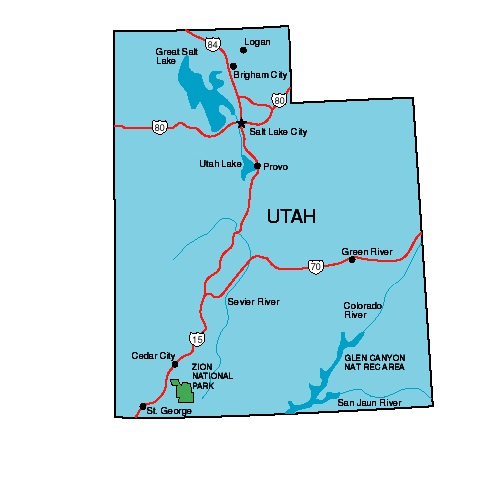
February 7, 2014

NLRB Again Proposes Rules to Speed Union Elections

By John M. Husband

After dropping its appeal of a District Court ruling that invalidated its “ambush election” rules, the National Labor Relations Board (NLRB or Board) has proposed those rules again.  By a vote of 3-2, the Board reissued proposed amendments to its representation case procedures.  The Board states that the amendments are designed to remove unnecessary delays and inefficiencies in representation case procedures.  The effect, however, is expected to be an increase in union wins as the union election procedures are streamlined and votes occur quicker. 

Board Lacked Quorum When Rules Adopted in 2011 

The NLRB first proposed its rules to speed up the union election process in June of 2011.  At the time, the Board had just three members as two positions were vacant.  Despite an outcry by the business community and receipt of almost 66,000 comments, two of the three Board members voted to adopt the rules.  The final rules were published in December of 2011 and went into effect on April 30, 2012. 

The U.S. Chamber of Commerce and other interested groups sought to stop the implementation of the ambush election rules by suing the NLRB in federal court in the District of Columbia.  Just two weeks after the rules went into effect, the judge in the case invalidated the rules, finding the Board lacked a three-member quorum needed to pass the rules.  Although two of the Board members voted in favor of the rules, the third Board member, the sole Republican, did not participate in the vote.  Finding that the rules were invalid for lack of the statutorily-mandated quorum, the judge did not need to address the challenge to the rules’ constitutionality and the lack of authority of the NLRB to adopt the rules.  In a distinct incident of foreshadowing of this week’s events, the judge specifically stated “nothing appears to prevent a properly constituted quorum of the Board from voting to adopt the rule if it has the desire to do so."  

The NLRB appealed the District Court’s decision, asking the U.S. Court of Appeals for the District of Columbia Circuit to reverse the lower court’s ruling.  On December 9, 2013, the NLRB withdrew its appeal pursuant to a joint stipulation by the parties.  It did so in anticipation of doing exactly what the District Court judge had suggested, namely proposing the rules again so that a properly constituted quorum of the Board can vote to adopt the rules.  Board Chairman Mark Gaston Pearce and Board members Kent Y. Hirozawa and Nancy Schiffer approved the re-issuance of the proposed rules. 

“Ambush Election” Rules Would Speed Union Election Process 

Published in the February 6, 2014 Federal Register, the proposed changes are virtually identical to those proposed in 2011.  Highlights of the proposed amendments include: 

  • A union may file its representation petition electronically, rather than by hand or regular mail.
  • A hearing must be held within 7 days of the union filing its petition.
  • Employers must provide a comprehensive “statement of position” on the union’s representation petition in advance of the hearing; any issues not included in the statement are waived.
  • Pre-election hearing is to determine only whether a question concerning representation exists; issues related to individual voter eligibility may be deferred to post-election procedures.
  • The parties right to file a post-hearing brief is discretionary as allowed by the hearing officer.
  • Deadline for employer to provide voter eligibility list is shortened from 7 work days to 2 work days from the Direction of Election.
  • Employer must provide email addresses and telephone numbers for employees eligible to vote in addition to the required names and home addresses.
  • Election need not wait for 25 days after the issuance of a Direction of Election.
  • Pre-election appeals to the Board are eliminated, leaving only a discretionary appeal of both pre- and post-election issues after the election occurs. 

Two Board Members Dissented 

Board members Philip A. Miscimarra and Harry I. Johnson III are not in favor of the proposed rules.  Although stating that they share in the majority’s desire to protect and safeguard the rights and obligations of those subject to the National Labor Relations Act, they do not believe it necessary to adopt a “wholesale rewrite” of the Board’s election procedure. 

Interested parties and the public may submit comments on the proposed rules until April 7. Electronic comments may be submitted through http://www.regulations.gov. Comments may also be mailed or hand delivered to: Gary Shinners, Executive Secretary, National Labor Relations Board, 1099 14th Street NW., Washington, DC 20570. The Board intends to hold a hearing on the amendments during the week of April 7.  We will keep you informed of developments on this issue.


Click here to print/email/pdf this article.