Category Archives: Employment Counseling

October 21, 2013

Tips for Paying Wages via Payroll Cards

By Mark Wiletsky 

DebitcardOffering payroll cards for the payment of employee wages may be a viable, cost effective alternative to paper paychecks.  It also can be an attractive offering for workers who do not have a checking or savings account at a bank or other financial institution.  Employers must be aware, however, that certain federal and state laws regulate payroll card accounts.  The Consumer Financial Protection Bureau (CFPB) recently issued Bulletin 2013-10 describing the application of the Electronic Fund Transfer Act (EFTA) and Regulation E, which implements the EFTA, to payroll card accounts.  Here are some tips for keeping your payroll card program in compliance with these laws. 

  • No Mandatory Use of Payroll Cards. You may not require that employees be paid on a payroll card from a particular institution.  You may offer payroll cards as a method of wage payment as long as you offer an alternative method, such as direct deposit to an account of the employee’s choosing or paper paychecks.  Acceptable methods of paying wages typically are governed by state wage payment laws.
  • Disclosure of Fees, Transfers, and Other Payroll Card Requirements. Employees to be paid on a payroll card are entitled to be informed of any fees, limitations or requirements related to making electronic fund transfers with the card that will be imposed by the financial institution who issues the card.  Clear, understandable written disclosures must be provided to cardholders in a form that the consumer may keep.
  • Account History Must Be Accessible.  The payroll card issuer must make each cardholder’s account history available, either through periodic statements, telephone balance inquiries, internet/web-based account history, or by providing 60 days of written account history upon request of the cardholder. 
  • Cardholder Liability for Unauthorized Use Must Be Limited.  Payroll cardholders are entitled to limited liability protections for the unauthorized use of their payroll cards, however they must report any unauthorized transfers in a timely period.
  • Cardholders’ Rights to Error Resolution.  Upon the timely report of an error regarding a payroll card account, financial institutions must respond to the cardholder.  In order to ensure a response, the cardholder must report an error within 60 days of either accessing his or her payroll card account history or receiving a written account history containing the error, whichever is earlier, or within 120 days after the alleged error occurred. 

In addition to the federal payroll card laws, state wage payment laws often regulate when and how payroll cards may be used to pay employee wages.  For example, in Colorado, employers may deposit employee wages on a payroll card provided the employee may access the full amount on the card for free at least once during the pay period, or the employee is given the choice to receive their pay through other means, such as direct deposit to an account of the employee’s choosing or a paycheck.  Be certain to check the wage payment laws in the states in which you operate to ensure compliance with any state payroll card requirements.


Disclaimer: This article is designed to provide general information on pertinent legal topics. The statements made are provided for educational purposes only. They do not constitute legal advice and are not intended to create an attorney-client relationship between you and Holland & Hart LLP. If you have specific questions as to the application of the law to your activities, you should seek the advice of your legal counsel.



Print Friendly and PDF

October 14, 2013

“Pretaliatory” Firing Recognized as Wrongful Discharge Claim in Utah

By Elizabeth T. Dunning 

Does an employee have to actually file a workers’ compensation claim to be protected from retaliatory termination?  No, says the Utah Court of Appeals.  In the recent Stone v. M&M Welding and Constr. Inc. decision, the Court ruled that an employee who was fired after expressing his intention to file a workers’ compensation claim could pursue a retaliatory discharge claim even though he failed to actually file his worker’s comp claim until eight months after he was fired.  

Employee Discusses Desire to File Workers’ Compensation Claim 

Terry Lee Stone was injured at a party hosted by M&M Welding and Construction in November of 2009.  Within days of the injury, Stone informed the company president that he wanted to file a workers’ compensation claim.  The president dissuaded Stone from doing so, instead holding his position open for two months until he could return to work.  Upon his return, however, Stone’s hours were reduced.  In March and April of 2010, Stone again informed the company that he intended to file a workers’ compensation claim, but failed to do so. 

In early May, a customer demanded that Stone be fired, believing that he exaggerated in reporting a spill of contaminated water at the customer’s site. A few days later, Stone contacted M&M to obtain insurance information for his workers’ compensation claim.  M&M fired him the following day.  Stone sued, alleging that M&M terminated him in retaliation for expressing his intent to file a workers’ compensation claim.  M&M argued that because Stone did not file his workers’ compensation claim until eight months after he was fired, his termination could not be in retaliation of the filing.  The trial court agreed, awarding summary judgment to M&M. 

Utah Court of Appeals Rules that Notifying Employer of Intent to File Workers’ Compensation Claim is Enough 

On appeal, the Court pointed to the Utah Supreme Court’s decision in Touchard v. La-Z-Boy Inc. which recognized that “retaliatory discharge for filing a workers’ compensation claim violates the public policy of this state; thus, an employee who has been fired or constructively discharged in retaliation for claiming workers’ compensation benefits has a wrongful discharge cause of action.”  In Stone, the Court of Appeals extended the basis for a wrongful discharge claim by concluding that conduct short of actually filing a workers’ compensation claim was protected conduct.  The Court wrote that preparing a claim, notifying the employer of the intent to file a claim or discussing his claim with coworkers could be sufficient to support a claim of retaliatory discharge.  In Stone’s case, he had repeatedly expressed to the company president and others that he intended to file a workers’ compensation claim so that conduct was sufficient to proceed with his retaliatory discharge lawsuit.


Policy Behind Recognizing “Pretaliatory” Discharge 

The Court recognized that a rule that protected employees only after they actually filed a workers’ compensation claim “would create a perverse incentive for an employer to discharge an injured employee as soon as the employer learns of the employee’s intention to file a claim.”  The Court found such a rule would contradict the important public policy embodied in the state’s workers’ compensation act. 

The Court’s ruling also squares with the conduct that can underlie a retaliation claim under other employment laws.  For example, retaliation claims under Title VII can be based on conduct where the employee either opposes workplace discrimination or participates in a discrimination claim, investigation or proceeding.  “Opposing” discrimination can include the threat of filing a discrimination charge as well as complaining about or reporting discrimination at work.   The Stone decision recognizing a retaliation wrongful discharge claim based on an employee’s expressed intent to file a workers’ compensation claim is analogous to the “opposition” retaliation claims recognized in such other employment laws. 

Employer Take-Aways 

Employers should be careful when making adverse employment decisions related to an employee who has either filed a workers’ compensation claim or is preparing to do so. Decisions should be unrelated to the claim or threat of claim and should be based on a reason that can be clearly articulated and is supported by thorough documentation.  Anything less may lead the affected employee to conclude that the adverse action was in retaliation for the workers’ compensation claim and make it difficult to defend a retaliation lawsuit.


Disclaimer: This article is designed to provide general information on pertinent legal topics. The statements made are provided for educational purposes only. They do not constitute legal advice and are not intended to create an attorney-client relationship between you and Holland & Hart LLP. If you have specific questions as to the application of the law to your activities, you should seek the advice of your legal counsel.


Print Friendly and PDF

August 29, 2013

DOJ Will Not Challenge State Marijuana Legalization Laws – New Federal Enforcement Policy Unlikely to Affect Colorado Employers

By Emily Hobbs-Wright 

Cannabis-leaf-mdOn August 29, 2013, the U.S. Department of Justice (DOJ) announced that it will not challenge the state ballot initiatives in Colorado and Washington that legalize the possession and use of small amounts of marijuana under state law.  The DOJ makes clear, however, that marijuana remains an illegal drug under the federal Controlled Substances Act.  This clarification means Colorado employers may still enforce their drug-free workplace policies and take appropriate action when an employee or applicant tests positive for marijuana. 

DOJ Expects States to Enforce Strict Regulatory Schemes 

In its August 29, 2013 Guidance Regarding Marijuana Enforcement, the DOJ identifies eight enforcement priorities for federal law enforcement and prosecutors, such as preventing distribution of marijuana to minors, preventing the diversion of marijuana from states where it is legal to other states, and preventing drugged driving and the exacerbation of other public health consequences of marijuana use.  The DOJ states that it expects that states and local governments to not only establish, but also enforce robust controls in their marijuana regulatory schemes to meet its federal objectives.  The guidance instructs federal prosecutors to review marijuana cases on an individual basis, weighing all available information and evidence but to no longer “consider the size or commercial nature of a marijuana operation alone as a proxy for assessing whether marijuana trafficking implicates the Department’s enforcement priorities . . .”  The DOJ further stated that if states fail to develop or enforce a strict regulatory scheme and the stated harms result, federal prosecutors will step in to enforce federal marijuana priorities and may challenge the regulatory schemes in those states. 

Courts in Colorado Uphold Employer Terminations for Employee Marijuana Use 

In April 2013, the Colorado Court of Appeals ruled that terminating an employee who tested positive for marijuana following his off-duty, off-premises use of medical marijuana did not violate Colorado’s lawful activities statute.  Coats v. Dish Network LLC, 2013 COA 62.  Brandon Coats, a quadriplegic who obtained a license to use medical marijuana under Colorado’s Amendment 20, was fired for violating his employer’s drug policy after testing positive for marijuana. Coats asserted that he never used marijuana on his employer’s premises, was never under the influence of marijuana at work and never used marijuana outside the limits of his medical marijuana license.  He sued his employer, Dish Network, alleging that his termination violated Colorado’s lawful off-duty activities statute, CRS § 24-34-402.5(1), which prohibits an employer from discharging an employee for engaging in “any lawful activity off the premises of the employer during nonworking hours.”

The Coats court looked to the plain meaning of the term “lawful” in the statute and decided that “for an activity to be ‘lawful’ in Colorado, it must be permitted by, and not contrary to, both state and federal law.”  Because marijuana was, and remains, illegal under federal law, the court held that marijuana use is not a “lawful activity” under the Colorado lawful activities statute and therefore, the employer did not violate the statute when it terminated him for testing positive for marijuana.

Earlier this week, the federal district court in Colorado ruled that enforcement of a drug-free workplace policy is a lawful basis for an employer’s decision to terminate an employee who tests positive for marijuana, whether from medical or any other use.  Curry v. MillerCoors, Inc., No. 12-cv-2471 (Order Granting Motion to Dismiss, D.Colo. Aug. 21, 2013). In granting the employer’s motion to dismiss, the federal court rejected all of the former employee’s claims related to his medical use of marijuana that resulted in a positive drug test and his termination under the employer’s drug policy.  Significantly, the court dismissed his disability discrimination claim under Colorado’s anti-discrimination statute as a matter of law, finding that it was lawful for the employer to discharge the employee under its drug-free workplace policy despite the employee’s allegation that he was terminated because of using medical marijuana to treat disabling medical conditions.  Judge John L. Kane wrote “anti-discrimination law does not extend so far as to shield a disabled employee from the implementation of his employer’s standard policies against employee misconduct.”  In dismissing the employee’s claim for violation of Colorado’s lawful activities statute, Judge Kane relied on the Coats decision and similarly ruled that because marijuana use is illegal under federal law, the employee’s medical marijuana use was not a “lawful activity” under the statute. 

DOJ’s Announcement Should Not Change Workplace Decisions 

The DOJ’s announcement of relaxed marijuana enforcement in states that have legalized marijuana does not alter employers’ ability to enforce their drug-free workplace policies.  On the contrary, because the DOJ reinforced that marijuana remains an illegal drug under federal law, the analysis used by courts in Colorado to uphold termination decisions based on positive drug tests should continue to apply.  Employers should create or revise their drug policies to state that use of any drug that is illegal under state or federal law will violate the policy.  Employers then should enforce their policies in a consistent and uniform manner, regardless of the legalization of marijuana use in Colorado.


Disclaimer:This article is designed to provide general information on pertinent legal topics. The statements made are provided for educational purposes only. They do not constitute legal advice and are not intended to create an attorney-client relationship between you and Holland & Hart LLP. If you have specific questions as to the application of the law to your activities, you should seek the advice of your legal counsel.

Print Friendly and PDF

August 20, 2013

NLRB Judge Strikes Down Employer’s Dress Code Following “Slave” Shirt Discipline

By Brian Mumaugh 

What is wrong with an employer’s dress code that prohibits clothing that displays vulgar or obscene phrases, remarks or images which may be racially, sexually or otherwise offensive as well as clothing that displays words or images that are derogatory to the Company?  It is overly broad and interferes with employees’ Section 7 rights under the National Labor Relations Act (NLRA or Act) to engage in union and/or protected concerted activity, according to an Administrative Law Judge (ALJ) for the National Labor Relations Board (NLRB).  The ALJ’s review of the dress code came after the employer disciplined an employee who wore a T-shirt with the word “slave” on it next to a picture of a ball and chain and the employee’s time clock number. Dismissing the employer’s argument that the shirt would be racially offensive to visitors who toured its facility, the ALJ found that the employer violated the Act by sending the employee home without pay to change his “slave shirt.” 

The History of the “Slave Shirt” 

Mark Gluch was a long time employee of automotive parts manufacturer Alma Products Company and a vigorous supporter of the union representing his bargaining unit.  The 2012 incident that gave rise to this case occurred when Gluch wore the “slave shirt” to work during a period of contentious negotiations for a new union contract.  The origin of the shirt, however, dated back to 1993 when company employees developed and paid for the “slave shirts” to send the company a message during an earlier round of difficult contract negotiations.  The shirts resurfaced in 1996 when the bargaining unit employees wore them while picketing during a strike.  Immediately following the strike, as many as 30% of the unit employees wore the “slave shirts” to work on any given Friday.  No discipline or policy infraction was noted or enforced at that time. 

Company Seeks to Avoid Racially Offensive Shirt 

When a new president and CEO, Alan Gatlin, took over for Alma Products in 2005, he noticed employees wearing the “slave shirt.” Finding the shirts to be racially offensive, he felt embarrassed that customers and visitors to the facility would see employees wearing the shirt and be offended.  He testified that in his view, the shirts did not reflect well on the Company with customers as they tried to get new business.  Gatlin asked the human resources manager to draft a dress code policy which was implemented in early 2006.  The dress code policy did not specifically reference the “slave shirt” but included general prohibitions against clothing that displayed “vulgar/obscene phrases, remarks or images which may be racially, sexually or otherwise offensive and clothing displaying words or images derogatory to the Company . . .”  The policy also stated “[i]f you are uncertain whether an article of clothing is appropriate under this policy, follow the old adage of better safe than sorry and refrain from wearing it at work.”


After implementing the dress code in 2006, it appears that employees seldom wore the “slave shirt” to work.  However, during difficult union contract negotiations in April 2012, Gluch and other employees began wearing pro-union shirts and pins and Gluch wore the “slave shirt” to work.  Gluch’s supervisor gave Gluch the option of removing the shirt or turning it inside out so that the writing would not be visible.  When Gluch refused to do so, he was sent home without pay for wearing the shirt. 

ALJ Rejects Company’s Concerns About Racial Discrimination 

The union filed an unfair labor practice charge claiming, among other things, that the policy and the Company’s enforcement of the policy, violated the Act.  The Company argued that the shirt’s “slave” reference was offensive to African-Americans due to the history of slavery in the United States.  Noting that an important buyer from Chrysler was African-American as was a new production supervisor at the facility, the Company asserted that it was entitled to discipline Gluch for wearing the racially offensive shirt.  The ALJ rejected this argument, stating that the NLRB has repeatedly found employees to be protected even when they displayed messages that likened their working conditions to those of a slave.  The ALJ noted that the dictionary definition of “slave” does not reference race, but instead focuses on the condition of servitude or being subject to a person or influence.  In addition, given the shirt’s history that it had been worn to work over the past two decades as support for the union, the ALJ determined that it would not be seen as carrying a racial message.  Moreover, the Company had a policy prohibiting racial discrimination since the 1990s, yet had failed to take any action to prohibit wearing the “slave shirt” as racially offensive prior to Gluch’s wearing of the shirt in 2012.  

Key to the ALJ’s analysis of the dress code policy was its general prohibition of words or images that are derogatory to the Company.  The ALJ found that the policy interfered with employees’ Section 7 activity, such as protected statements to coworkers, supervisors or third parties who deal with the Company, because it would prohibit employees from objecting to their working conditions and seeking the support of others in improving them.  The dress code policy was found to be unlawfully overbroad because it prohibits all communications derogatory to the company regardless of whether the words are racially or sexually discriminatory or are protected as concerted activities under the National Labor Relations Act.  In addition, by directing employees to be “safe” not “sorry,” the ALJ stated that the policy directs employees to construe the prohibition on derogatory comments such that it prohibits Section 7 activity. 

Dress Code Policies That Do Not Restrict Section 7 Activity 

With the NLRB (and its ALJs) striking down a variety of employer policies relating to both union and non-union employees, it is difficult to draw a bright line to determine which policies pass scrutiny and which do not.  That said, employers can learn lessons from this recent decision that may help keep their dress code policy away from NLRB review.  First, use specific examples of acceptable versus unacceptable attire rather than general statements that require interpretation.  Second, if your workplace warrants different dress standards for different segments of employees (e.g., public-facing employees vs. behind the scenes employees), make those standards clear and justified by business necessity.  Third, if you include a statement that prohibits derogatory words or images on clothing, include a statement that communications protected by Section 7 are permissible under the dress code.  Finally, enforce your policy in a uniform and consistent manner, so that all dress code violations are treated similarly regardless of the employee or supervisor involved.


Disclaimer:This article is designed to provide general information on pertinent legal topics. The statements made are provided for educational purposes only. They do not constitute legal advice and are not intended to create an attorney-client relationship between you and Holland & Hart LLP. If you have specific questions as to the application of the law to your activities, you should seek the advice of your legal counsel.


Print Friendly and PDF

August 14, 2013

DOL Updating FMLA Guidance to Reflect DOMA Decision

By Brad Cave 

New Labor Secretary, Tom Perez, indicated that the Department of Labor (DOL) has updated departmental guidance regarding spousal leave provisions of the Family and Medical Leave Act (FMLA) to reflect the Supreme Court’s recent decision that struck down certain provisions of the Defense of Marriage Act (DOMA).   As the DOL updates its policies, employers too need to examine and update their FMLA policies.  Here is what you need to know. 

Unconstitutionality of DOMA Means FMLA Spousal Leave Applies to Legally Married Same-Sex Couples 

The Supreme Court’s decision in United States v. Windsor focused on Section 3 of DOMA which defined “spouse” as a husband or wife of the opposite sex for purposes of federal laws or regulations.  Because of that definition, legally married same-sex couples were not entitled to federal benefits or rights.  As a result, FMLA leave benefits did not extend to employees needing time off to care for a same-sex spouse with a serious health condition.   

In finding Section 3 of DOMA unconstitutional, the Court stated that the regulation of marriage traditionally rests exclusively with the states and the federal government violates equal protection principles by denying rights and benefits to same-sex couples who are legally married under state law.  The result is that federal rights and benefits, including FMLA spousal leave benefits, now apply equally to state-sanctioned same-sex couples and heterosexual couples.  

DOL Implementing Court’s Decision 

Secretary Perez affirmed the availability of spousal leave under the FMLA based on same-sex marriages.  He indicated that the DOL has removed references to DOMA from some of its guidance documents and will continue to take steps to implement the Court’s Windsor decision. 

When Do Employers Need to Recognize Same-Sex Marriages for FMLA Purposes? 

With some states legally recognizing same-sex marriages and others not, a key question for employers is which state’s law applies for FMLA spousal leave purposes?  According to the DOL’s 2009 FMLA regulations, “spouse” means a husband or wife as recognized by the state where the employee resides.  This means that the employer must determine if same-sex marriages are lawful in the state where the employee requesting FMLA leave lives, not where the employer is located or where the employee actually works.  At present, 13 states plus the District of Columbia recognize same-sex marriages as lawful:  California, Connecticut, Delaware, Iowa, Massachusetts, New Hampshire, Maine, Maryland, Minnesota, New York, Rhode Island, Vermont and Washington.  

Some groups are urging the DOL to adopt a rule that would recognize FMLA rights based on the state where the marriage was celebrated, not the state of residency.  Although the DOL has not yet proposed any rule changes on this issue, we will keep an eye on it and will let you know if any changes to the marriage recognition rules are proposed. 

Update Your FMLA Policy for Same-Sex Spousal Leave 

If you have employees living in one or more states that recognize same-sex marriages (or in the District of Columbia), update your FMLA policy, forms and practices to incorporate spousal leave benefits for recognized same-sex marriages.  This includes FMLA leave for an employee who needs to care for a same-sex spouse with a serious health condition, leave because of a qualifying exigency due to the employee’s same-sex spouse being on “covered active duty” and FMLA military caregiver leave for an employee who needs to care for a same-sex spouse who is a “covered servicemember” or “covered veteran.”  Be sure to look at the state where the employee resides when determining whether same-sex marriage is deemed lawful and recognized for FMLA purposes.  If you use an FMLA tracking mechanism, make sure the system properly tracks for same-sex spousal leave.  As always, train your managers, supervisors and human resource professionals on this change in FMLA benefit coverage.


Disclaimer: This article is designed to provide general information on pertinent legal topics. The statements made are provided for educational purposes only. They do not constitute legal advice and are not intended to create an attorney-client relationship between you and Holland & Hart LLP. If you have specific questions as to the application of the law to your activities, you should seek the advice of your legal counsel.

Print Friendly and PDF

July 29, 2013

The Battle Over Background Checks Continues — State AGs Accuse EEOC of “Gross Federal Overreach”

By Mark Wiletsky 

Is it discriminatory if an employer does not hire anyone with a particular criminal conviction, regardless of that person’s race, gender, religion, or other protected characteristic?  According to the EEOC’s April 2012 Enforcement Guidance, it might be.  But in a July 24, 2013 letter sent to EEOC Commissioner Jacqueline Berrien and the four EEOC Board Members, nine state Attorneys’ General (AGs) disagree.  The AGs chastise the EEOC for filing recent lawsuits against BMW Manufacturing Co., LLC and Dolgencorp (Dollar General), in which the EEOC alleges that these employers violated Title VII’s disparate impact prohibition by using a bright-line screening policy that rejected all individuals with past convictions in certain categories of crimes, such as murder, assault, reckless driving and possession of drug paraphernalia.   

The letter then criticizes the EEOC’s April 2012 Enforcement Guidance on Arrest and Conviction Records, stating that the EEOC’s policy guidance incorrectly applies the law and constitutes an unlawful expansion of Title VII.  The AGs argue that if Congress wishes to protect former criminals from employment discrimination, it can amend the law, but it is not the EEOC’s role to expand the protections of Title VII under the guise of preventing racial discrimination. 

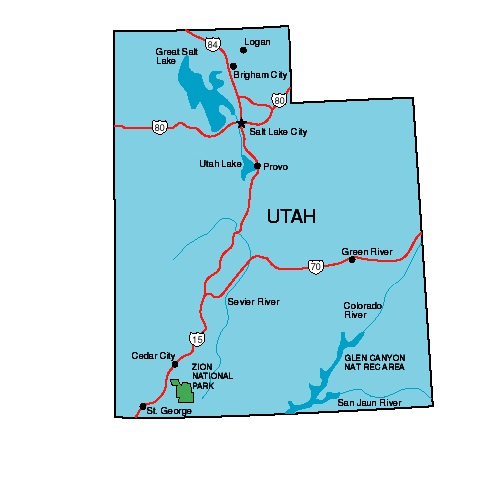
The Republican state AGs from Colorado, Montana, Utah, Kansas, Nebraska, West Virginia, Alabama, South Carolina and Georgia joined in this missive to say “enough is enough” on the EEOC’s background check lawsuits.  Citing the burden on businesses to undertake more individualized assessments of an applicant’s criminal history, the AGs urge the EEOC to rescind its April 2012 Enforcement Guidance and dismiss the lawsuits against Dollar General and BMW.  Not likely, but it may get the attention of federal lawmakers who may try to rein in the EEOC’s position on this issue.


Disclaimer:This article is designed to provide general information on pertinent legal topics. The statements made are provided for educational purposes only. They do not constitute legal advice and are not intended to create an attorney-client relationship between you and Holland & Hart LLP. If you have specific questions as to the application of the law to your activities, you should seek the advice of your legal counsel.

Print Friendly and PDF

June 21, 2013

Arbitration Agreement Waiving Class Claims Upheld – What it Means for Employers

By Jeffrey T. Johnson 

Supreme court bldgArbitration is a matter of contract between the parties and courts are not permitted to invalidate an agreed-upon provision that prohibits claims from being arbitrated on a class action basis, the U.S. Supreme Court ruled in its June 20, 2013 opinion in American Express Co. v. Italian Colors Restaurant.  Employers can benefit from this ruling by crafting arbitration agreements that limit an employee’s right to pursue employment claims on behalf of a class of employees.   

Cost to Pursue Individual Arbitration Not a Factor 

At issue in the American Express case was an arbitration agreement between American Express and merchants who accept its charge cards that required the parties to arbitrate all disputes.  The agreement further stated that “there shall be no right or authority for any Claims to be arbitrated on a class action basis.”  

When numerous merchants filed a class action lawsuit against American Express alleging violations of federal antitrust laws due to American Express’ alleged high card fees, American Express moved to dismiss the lawsuit and instead force each merchant to arbitrate its claim individually, as required by the arbitration agreement.  The District Court agreed with American Express and dismissed the class action lawsuit.  The merchants appealed the dismissal to the Second Circuit Court of Appeals, arguing that the cost to prove the antitrust claims by each individual merchant would far exceed the amount they could recover as an individual plaintiff.  The merchants submitted a declaration from an economist who estimated that the cost of expert analysis on the antitrust claims would be “at least several hundred thousand dollars, and might exceed $1 million.”  The maximum amount of damages that each individual plaintiff could expect to recover was $38,549 as treble damages.  The Second Circuit reversed the dismissal, ruling that because the cost for each merchant to arbitrate their claim individually was prohibitive, the class-action waiver in the arbitration agreement was unenforceable and arbitration could not proceed.  American Express sought review by the Supreme Court. 

In a 5-3 ruling, the Supreme Court held that the Federal Arbitration Act (FAA) does not allow courts to invalidate a contractual waiver of class actions on the ground that the plaintiffs’ cost to arbitrate a federal statutory claim individually exceeds the potential recovery.  Justice Antonin Scalia, writing for the majority, rejected the merchants’ argument that cost vs. recovery should factor into the enforceability of an arbitration agreement.  He wrote that “the antitrust laws do not guarantee an affordable procedural path to the vindication of every claim.”  The Court drew a distinction between contract provisions that prohibit an individual from asserting their statutory rights at all (e.g., a waiver of certain claims) and prohibiting class claims.  Relying on earlier precedent, the Court reiterated that it may invalidate arbitration agreements that operate as a prospective waiver of a party’s right to pursue statutory remedies, but will not invalidate an agreement because it is not worth the expense involved in a party proving a statutory remedy.  The Court also refused to create preliminary hurdles before a plaintiff could be held to contractually-agreed arbitration, such as requiring a court to evaluate the cost to prove claims as well as the damages that could be recovered if the plaintiff is successful.  Justice Scalia wrote that “such a judicially created superstructure” would “undoubtedly destroy the prospect of speedy resolution that arbitration in general and bilateral arbitration in particular was meant to secure.” 

Dissent:  Majority’s Response to Merchants Was “Too Darn Bad” 

Justice Elena Kagen, joined by Justices Ruth Bader Ginsburg and Steven Breyer (Justice Sotomayor did not take part in the decision), wrote a stinging dissent in which she characterized the case as small business owners who were forced to accept a form contract by a monopolizing credit card company that violated antitrust laws.  The dissent states that if the arbitration clause is enforceable, American Express has insulated itself from antitrust liability because it used its monopoly power to insist on a contract that “effectively deprives its victims of all legal recourse.”  Justice Kagen wrote: the “nutshell version of today’s opinion, admirably flaunted rather than camouflaged:  Too darn bad.”  The three dissenting justices believe that the FAA was never meant to produce the outcome arrived at by the majority, and that the majority decision blocks the vindication of meritorious federal claims and insulates wrongdoers from liability.  The dissent instead would rely on the “effective vindication” rule, namely that an arbitration clause will not be enforced if it prevents the effective vindication of federal statutory rights, however it achieves that result, to invalidate the bar on class arbitration in the American Express agreement. 

Employment Arbitration Agreements 

Recent Supreme Court decisions upholding arbitration agreements, such as the American Express opinion, may bolster efforts to use arbitration agreements in the employment context.  Although there are pros and cons to utilizing arbitration agreements with employees, a significant advantage is the ability to prohibit class actions by requiring employees to arbitrate their employment disputes on an individual basis.  In addition, arbitration can be less costly than litigating in court, and more confidential as most arbitration filings are not public records.  Perhaps most significantly, arbitration allows employment cases to be heard by arbitrators, not juries, thereby reducing the risk of runaway verdicts.  Employers should consult with employment counsel to determine if arbitration agreements are warranted with their workforce and if so, what provisions will best protect the company’s interests.


Disclaimer: This article is designed to provide general information on pertinent legal topics. The statements made are provided for educational purposes only. They do not constitute legal advice and are not intended to create an attorney-client relationship between you and Holland & Hart LLP. If you have specific questions as to the application of the law to your activities, you should seek the advice of your legal counsel.

Print Friendly and PDF

June 19, 2013

Wyoming Employers – Time to Pay More Attention to those Unemployment Claims

320px-Flag_of_Wyoming_svgBy Brad Cave 

July 1 creates some new incentives for Wyoming employers to participate in the unemployment claims system.  Currently, UI benefits are paid to the employee beginning immediately when a deputy clerk of the Wyoming Department of Workforce Services determines that the employee is entitled to benefits.  If the employer appeals that determination, and a hearing officer reverses the deputy’s decision, the employer’s account is not charged for the benefits paid under the deputy’s erroneous decision.  The same is true if the employer obtains reversal of a decision granting benefits through an appeal to the Unemployment Insurance Commission or the district court. 

Effective July 1, this general rule has an exception that all employers should keep in mind.  Bowing to federal pressure, the Wyoming Legislature amended the Wyoming Employment Security Law (ironic name for the unemployment benefit statute, isn’t it) to require employers to respond to requests for information from the Department.  See, http://legisweb.state.wy.us/2013/Enroll/SF0073.pdf  Employers will no longer escape the monetary consequences of erroneous payments if the Department determines that, (1) an erroneous payment of benefits was made because the employer was at fault for failing to respond adequately or on time to a written request for information; and, (2) the employer has established a pattern of failing to respond adequately or on time to such requests.  The employer’s responses must be received within fifteen (15) days after the Department sends the request, whether by regular mail or email.   What constitutes a pattern of failing to respond remains to be seen – the Legislature said only that the phrase means a “repeated documented failure” to respond to written requests for information, “taking into consideration the number of instances of failure in relation to the total volume of requests by the Department” to the employer. 

Action items for Wyoming employers: 

1.  Maintain documentation of your responses to the Department on unemployment claims.  We don’t believe that certified mail is necessary for most employers, but we do suggest keeping copies of all the documentation you return in response to a request.  Also, the amendment requires the Department to acknowledge receipt of the requested information within fifteen (15) days if the employer requests such acknowledgement. 

2.  Some employers use a third-party agent or centralized offices in remote states to respond to unemployment claims.  Be sure to notify those who process your UI claims, as the amendment clearly holds the employer responsible for delays or inadequate information from an employer’s agent.  Likewise, if you have drug your feet getting back to your UI agent with the necessary information, now is the time to improve your response time so the agent does not blame you for a “pattern of failing to respond.” 

3.  As always, be very careful about what you (or your agent) say or submit in response to a request for information.  A determination for or against an employee regarding unemployment benefits is not “binding, conclusive or admissible” in any subsequent litigation between the employer and employee.  But the employer can be bound by what it says were the reasons for termination and the documents it submits to support the termination.  Any discrepancy in the employer’s reasons can weaken your objection to the UI claim and be used in other legal proceedings to challenge the legitimacy of your reasons for the termination.


Disclaimer: This article is designed to provide general information on pertinent legal topics. The statements made are provided for educational purposes only. They do not constitute legal advice and are not intended to create an attorney-client relationship between you and Holland & Hart LLP. If you have specific questions as to the application of the law to your activities, you should seek the advice of your legal counsel.


Print Friendly and PDF

May 7, 2013

Small Colorado Employers Face Higher Damages for Discrimination Claims

By Mark Wiletsky and Steve Gutierrez

Small businesses beware: your employees now have more incentive to sue you.  As of January 1, 2015, employees can recover compensatory and punitive damages for employment discrimination claims against businesses that employ between one to fourteen people under Colorado’s Job Protection and Civil Rights Enforcement Act of 2013, signed into law by Governor John Hickenlooper on Monday, May 6, 2013.  But don’t despair.  By taking some proactive steps now, businesses can minimize their exposure to potential claims. 

Increased Exposure for Small Employers 

Colorado’s new anti-discrimination law changes the landscape for small employers by allowing compensatory and punitive damages against Colorado’s small businesses (with 1-14 employees), along with attorneys’ fees and costs to the employee if he or she prevails, back pay, front pay, interest, and other potential relief.  Thankfully, the new Colorado law contains some safeguards against outrageous damage awards that would likely put small employers out of business.  For businesses with 1-4 employees, compensatory and punitive damages are capped at $10,000.  For businesses with 5-15 employees, such damages are capped at $25,000.  Businesses with greater than 15 employees are subject to the existing damages caps found in the federal anti-discrimination laws. 

The availability of these damages to employees of businesses with fewer than 15 employees will likely result in more discrimination cases filed in Colorado against small businesses, significantly raising the potential exposure for small business owners.  That is especially true given that such claims may be filed in state court, which is often viewed by attorneys representing employees as a more favorable forum for such claims. 

Age Discrimination No Longer Cut Off at Age 70 

The Job Protection and Civil Rights Enforcement Act of 2013 also eliminates the age 70 cutoff for age discrimination claims brought under Colorado law.  This brings the state law into line with the federal Age Discrimination in Employment Act which does not have an upper age limit.  Consequently, employees age 40 and older are protected from employment discrimination under both state and federal law. 

Good Faith Efforts May Avoid Punitive Damages 

Under the new Colorado law, employers will not be subject to punitive damages if they can demonstrate good-faith efforts to prevent discriminatory and unfair employment practices in the workplace.  In addition, no punitive damages are available in a lawsuit involving a claim of failure to make a reasonable accommodation for a disability if the employer can demonstrate good-faith efforts to identify and make a reasonable accommodation that would provide the disabled employee with an equally effective opportunity and would not cause an undue hardship on the employer’s operation.  Small businesses should begin those good-faith efforts now so that policies and procedures to prevent and respond to discrimination are in place when the law goes into effect. 

Steps Small Businesses Should Take to Minimize Risk 

Unfortunately for small businesses, the mere threat of a lawsuit, however meritless, may stretch tight resources to the breaking point.  That is why it is so important to take proactive measures now, which will help minimize the risk of such lawsuits.  Among other things, small businesses should:  

1)  Adopt and distribute policies that prohibit discrimination, harassment, and retaliation in the workplace.  Require new and existing employees to acknowledge their receipt of these policies, preferably on an annual basis. 

2)  Train supervisors, managers and employees.  Everyone in the workplace should be trained on your anti-discrimination policies and procedures with specialized training provided to supervisors and managers who must recognize harassment and discrimination and know what to do when they observe it or receive a complaint.  In small workplaces, dealing with complaints of discrimination or retaliation can be difficult.  Still, if you address it promptly and appropriately, you will be in a better position to avoid or defend against a claim. 

3)  Document performance issues.  We often see meritless lawsuits filed because legitimate performance concerns were not shared with the employee or appropriately documented.  If an employee has performance issues, be sure to get it in writing.  Focus on the problem, give concrete examples, and warn the employee that a failure to achieve immediate and sustained improvement may result in termination. 

4) Arbitration agreements. Consider whether it would be appropriate to have employees sign an arbitration agreement.  Such agreements take discrimination claims out of the civil court system, and generally allow for a more streamlined resolution.  However, arbitration is not necessarily cheaper than a court proceeding; in fact, in some cases it might cost more.  Be sure to consider all the benefits and burdens of arbitration before relying on such agreements.  And if you prefer arbitration, make sure your agreement complies with all applicable legal requirements.   

Essentially, small employers need the same policies and procedures to deal with discrimination as larger employers do, even though many smaller employers simply do not have the same resources.  Take the next 18 months before the law becomes effective to educate yourself, your supervisors and your employees on discrimination issues and take the steps that will help minimize your risk to the damages that will be available soon to aggrieved employees. 

April 25, 2013

BUZZ KILL: Employee Legally Fired For Off-Duty Marijuana Use

By Emily Hobbs-Wright & Brad Williams

The Colorado Court of Appeals issued a precedent-setting decision today upholding an employee’s firing for off-duty marijuana use.  Citing federal law, the court held that using pot during non-working hours is not “lawful activity” under the state’s lawful off-duty activity statute.  The decision provides the first direct guidance on terminating workers for off-duty marijuana use since Amendment 64 legalized the drug’s use and possession last November.

The case involved a quadriplegic employee licensed to use pot under the state’s medical marijuana amendment.  The company terminated his employment after he tested positive for drugs in violation of company policy.  The terminated worker claimed that he used the drug within the limits of his license, had never smoked on his employer’s premises, and had never been under the drug’s influence at work. 

In the lawsuit, the terminated worker claimed that the company’s actions violated Colorado’s lawful off-duty activity statute, which prohibits termination for any “lawful activity” conducted off an employer’s premises during nonworking hours.  Before today, Colorado courts had never squarely addressed whether the statute prohibits termination for off-duty marijuana use, when it is permitted under Colorado law. 

Invoking a dictionary definition of the term “lawful,” the Court of Appeals held that “for an activity to be ‘lawful’ in Colorado, it must be permitted by, and not contrary to, both state and federal law.”  Because marijuana use remains illegal under federal law, termination for off-duty pot-smoking does not violate the statute.  The court also noted that its interpretation maintained the “balance between employer and employee rights” reflected elsewhere in Colorado law.

The decision is hugely important for Colorado employers.  Amendment 64, like the medical marijuana amendment before it, did not require employers to “permit or accommodate” pot use, and expressly permitted policies restricting such use.  But before today, courts had never previously decided whether state or federal law defines “lawful activity” under the statute.

The decision may not be the final word.  Further appeal to the Colorado Supreme Court is possible, and other legal theories based on disability and similar laws remain untested.  But for now, the decision provides the best guidance yet on terminating marijuana users, suggesting that courts will protect employers’ rights to enforce drug policies notwithstanding Colorado’s legalization of marijuana.  It further reinforces the importance of employers defining illegal drugs as those prohibited under both state and federal law in drug policies.

This article is designed to provide general information on pertinent legal topics. The statements made are provided for educational purposes only. They do not constitute legal advice and are not intended to create an attorney-client relationship between you and Holland & Hart LLP. If you have specific questions as to the application of the law to your activities, you should seek the advice of your legal counsel.