September 12, 2023

How to Address Damage to Company or Customer Property

Laurie Rogers

by Laurie Rogers

Question: Can we legally require employees to reimburse the company for damage to customer or company property (i.e., the full amount of damages or insurance deductible)?

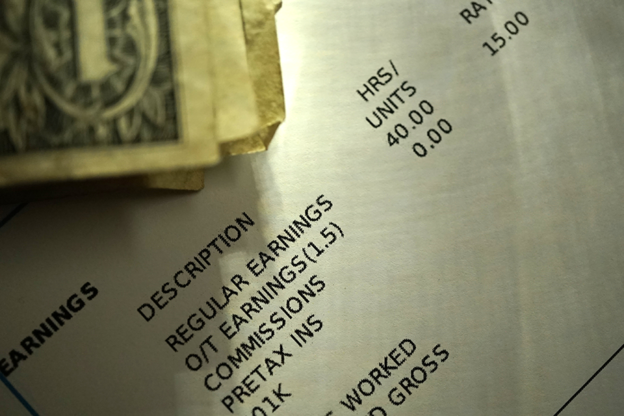
Answer: Many employers have policies requiring employees to reimburse them for damage to company property, usually through payroll or final paycheck deductions. Before implementing such a policy, you must consider state and federal laws that may restrict or prohibit your ability to make such payroll deductions. Read more >>

September 8, 2023

EEOC Proposed Regulations to Implement Pregnant Workers Fairness Act

Laurie Rogers

by Laurie Rogers

Pregnant workers have certain protections under the Pregnancy Discrimination Act (PDA) and the Americans with Disabilities Act (ADA), but gaps remain. The Pregnant Workers Fairness Act (PWFA) aims to close the gaps and better protect pregnant employees. To implement the Act, the Equal Employment Opportunity Commission (EEOC) recently proposed regulations that significantly increase employers’ obligations to reasonably accommodate their pregnant employees.

Expanded protections

On August 11, 2023, the EEOC proposed rules to implement the PWFA, a law that took effect on June 27, 2023. Before the PWFA, the PDA (which amended Title VII of the Civil Rights Act of 1964) and the ADA provided pregnant and postpartum applicants and employees with certain limited protections.

Under the PDA, pregnant workers can show a violation only if they can identify similarly situated employees who received an accommodation or if there is direct evidence of disparate treatment. Under the ADA, pregnant employees have a right to an accommodation only if they can demonstrate they have a pregnancy-related disability, which doesn’t include the pregnancy itself. Read more >>

June 26, 2023

Religious Accommodation: SCOTUS Approaching Decision on Title VII ‘Undue Hardship’ Standard

Steven Gutierrez

by Steven Gutierrez

On April 18, 2023, the U.S. Supreme Court heard oral arguments in a case involving a former U.S. Postal Service (USPS) worker who was denied a religious accommodation to observe his sabbath. The broad implications of a decision that favors the former worker could change the analysis for employers when assessing employee requests for religious accommodations.

Background

Gerald E. Groff is an evangelical Christian who began working at the USPS in 2012. In 2013, the USPS contracted with Amazon to deliver packages on Sundays. Read more >>

June 21, 2023

Our Company Is Expecting to Start a New Business Line, Should We Revisit Our Policies and Procedures?

Steven Gutierrez

by Steven Gutierrez

The fact your company is setting up a new business line doesn’t mean you must revisit the company’s policies and procedures, unless the addition of the new line would increase your employee count so much that the company would be obligated to offer new benefits or comply with additional mandates. Read more >>

June 8, 2023

Shifting Landscape: New Laws Significantly Impact Colorado Employers

Mark Wiletsky

Mark Wiletsky

by Mark Wiletsky and Joshua Kohler

During this legislative session, Colorado enacted more protections for employees in the workplace, including redefining what constitutes unlawful harassment, restricting confidentiality agreements, expanding the ability to use paid sick leave, and addressing job posting requirements.

Governor Polis signed into law the Protecting Opportunities and Workers’ Rights (POWR) Act (SB23-172), Additional Uses of Paid Sick Leave (SB23-017), and the Ensure Equal Pay for Equal Work Act (SB23-105). POWR and Additional Uses of Paid Sick Leave go into effect August 7, 2023 and Ensure Equal Pay for Equal Work Act goes into effect January 1, 2024.  These laws, and POWR in particular, make considerable changes to the obligations and requirements of employers in Colorado. Now is a good time to revisit any form agreements used with current or prospective employees (e.g., settlement agreements, employment agreements, etc.) and employee handbooks, update anti-harassment and complaint procedures and plan for anti-harassment training, and assess your internal job posting process.

Read more >>

April 7, 2023

How to Support an Employee Going Through a Gender Transition

Laurie Rogers

by Laurie Rogers

As transgender employees become more comfortable living openly as their authentic selves in the workplace, employers should be prepared to work with transitioning employees. Consider putting a plan in place that fosters an inclusive work environment and guards against discrimination based on gender identity and expression. This plan should include communicating with transitioning employees, educating your workforce, and creating clear policies addressing the rights and needs of transgender and gender nonconforming employees.

Communication

You should create an accepting work environment that invites employees to speak openly with HR or management. Inviting open communication directly with company leadership allows you to address concerns before they escalate.

When a transitioning employee comes to you, work with them on their anticipated transition timeline, including whether and how they want their coworkers to learn about the transition. Encourage self-identification of pronouns and acknowledge and allow name and/or pronoun changes within your HR systems, regardless of whether the employee has legally changed their name. Assure the transitioning employee that they may dress in a manner that corresponds with their gender expression or identity, and they are permitted to use bathrooms and locker rooms that align with their gender identity. Read more >>

April 5, 2023

10th Circuit Rejects ERISA Arbitration Provision

Alex Smith

by Alex Smith

Courts have been mixed regarding the enforceability of arbitration provisions in Employee Retirement Income Security Act (ERISA) retirement plans since the U.S. 9th Circuit Court of Appeals’ 2019 decision in Dorman v. Charles Schwab Corp. Some employers and plan sponsors have considered adding arbitration provisions based on Dorman and the proliferation of ERISA class action lawsuits. Following the decision from the 10th Circuit (whose rulings apply to all Colorado employers) in Harrison v. Envision Management Holding, Inc. Board, however, employers in the 10th Circuit may want to reconsider.

10th Circuit’s decision

In Harrison, the 10th Circuit rejected the enforcement of an employee stock ownership plan’s (ESOP) arbitration provision in a lawsuit filed by a plan participant alleging the ESOP’s fiduciaries overpaid for the employer’s stock, breached numerous ERISA fiduciary duties, and engaged in prohibited transactions.

The 10th Circuit’s ruling focused on the ESOP’s specific arbitration provision, which allowed participants to obtain only individual relief and therefore made it impossible for them to obtain the plan-wide relief under ERISA. As a result, the 10th Circuit concluded the participants couldn’t effectively vindicate their statutory rights under ERISA. Read more >>

March 31, 2023

States That Still Require Paid Sick Leave for COVID-19

Laurie Rogers

by Laurie Rogers

Question: Do any states still require employers to provide paid COVID-19 sick leave in 2023?

Answer: Yes. As of March 15, 2023, states, counties, or cities that still require an employer to provide paid COVID-19 sick leave include:

  • Chicago and Cook County, Illinois (vaccine leave);
  • Colorado (public health emergency leave);
  • Los Angeles County, California (supplemental paid sick leave and paid vaccine leave);
  • Nevada (paid vaccine leave and paid leave for public accommodations facilities);
  • New York State (paid vaccine leave);
  • Oakland, California (supplemental paid sick leave); and
  • Philadelphia, Pennsylvania (supplemental paid sick leave).

February 23, 2023

NLRB Changes the Game for Confidentiality Provisions in Severance Agreements

By Greg Saylin, Steven Suflas, Tyson Horrocks, Brit Merrill, and Kody Condos

This week, the National Labor Relations Board (NLRB or “Board”) issued a decision that could significantly shape the terms of severance agreements with departing employees. Under this decision, all employers are prohibited from including provisions that prohibit disparagement of the employer or prevent the employee from discussing the terms of the agreement. However, the opinion is certain to be challenged in the federal appellate courts.

Often, non-unionized employers do not think the National Labor Relations Act (NLRA or “the Act”) applies to them. However, that is not true. Section 7 of the Act guarantees employees “the right to self-organization, to form, join, or assist labor organizations, to bargain collectively through representatives of their own choosing, and to engage in other concerted activities for the purpose of collective bargaining or other mutual aid or protection.” Read more >>

December 5, 2022

Can An Employee Be Required to Sign a Noncompete Agreement Before They Receive Their Final Paycheck?

Juan Obregon

By Juan Obregon

Question: Can we require an employee to sign a noncompete agreement before they receive their final paycheck?

Answer: In short: no, employers cannot withhold an employee’s final paycheck until they sign a non-compete. Doing so likely violates Colorado’s restrictive covenant statute (Colo. Rev. Stat. 8-2-113) and the Colorado Wage Claim Act (Colo. Rev. Stat. 8-4-101, et seq).

Under Section 8-4-109 of the Colorado Wage Claim Act, when the employer terminates an employee, “wages or compensation for labor or service earned, vested, determinable, and unpaid at the time of such discharge is due and payable immediately.” When an employee quits “the wages or compensation shall become due and payable upon the next regular payday.” Either way, if the employee performed the labor to earn those wages, they are due and failing to pay it timely could subject the employer to significant penalties. Read more >>