Category Archives: Labor Law

August 2, 2018

NLRB Revisiting Use of Employer E-Mail Systems

Steven Gutierrez

By Steve Gutierrez

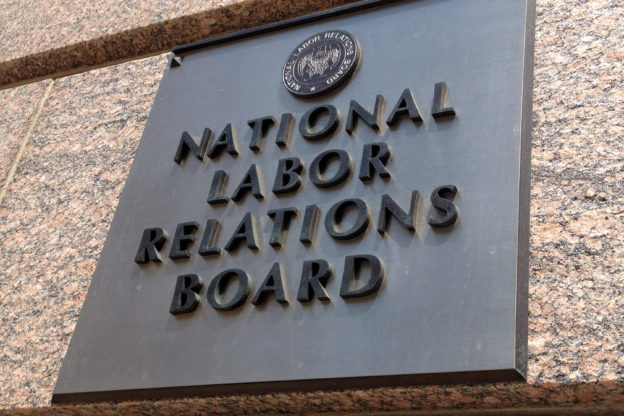
On August 1, 2018, the National Labor Relations Board (NLRB or Board) issued an invitation for interested parties to file briefs on whether the Board should change or overrule its 2014 decision in Purple Communications, Inc., 361 NLRB 1050. In that case, the Board ruled that employees who already have access to an employer’s e-mail system at work may use that e-mail system during non-working time for Section 7 communications. In other words, employees may send e-mails to their co-workers related to union organizing and concerted activities related to wages or other terms and conditions of employment via their company’s e-mail system.

The Purple Communications decision had overturned an earlier ruling in Register Guard, 351 NLRB 1110 (2007) which held that facially neutral employment policies restricting employees’ use of their employer’s e-mail system did not violate the National Labor Relations Act merely because the policies might have the effect of limiting the use of those systems for union-related communications. The Board is now considering a case that will permit it to reconsider the use of an employer’s e-mail system by employees for Section 7 purposes. In fact, the Board also seeks comments on the appropriate standard for the Board to evaluate policies that govern the use of other employer-owned computer resources, not just e-mail.

NLRB Chairman John Ring and NLRB members Marvin Kaplan and William Emanuel issued the Notice and Invitation to File Briefs over the dissent of the other two Board members, Mark Gaston Pearce and Lauren McFerran. Those wishing to file an amicus brief must submit it on or before September 5, 2018.

June 27, 2018

SCOTUS Deals Huge Blow to Government Unions

Steven Gutierrez

By Steve Gutierrez

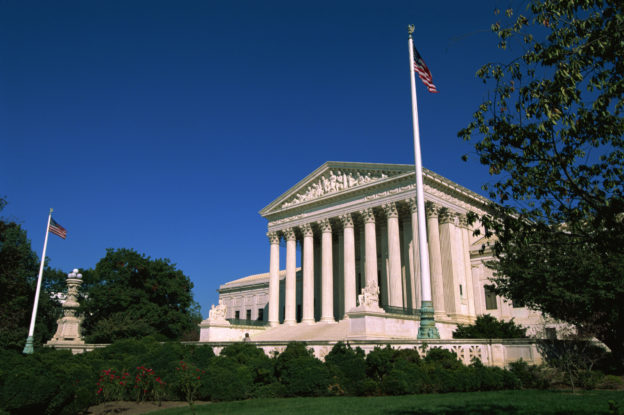
In a 5-to-4 decision, the U.S. Supreme Court ruled that government employees who choose not to join a union cannot be forced to pay agency fees to the union. In so ruling, the Court overturns its 1977 ruling in Abood v. Detroit Board of Education which has permitted public sector unions to charge non-members a fee equivalent to union dues to cover the costs of collective bargaining, contract administration, and grievances. Janus v. AFSCME, 585 U.S. ___ (2018).

Free Speech Violated

Illinois state employee Mark Janus challenged paying agency fees to the union that represents the Illinois government employees. He alleged that he opposes many of the positions taken by the union, including positions advanced through collective bargaining. Janus argued that being forced to pay agency fees, which was authorized by Illinois law and consistent with Abood, violated his First Amendment right to free speech. 

Five members of the high court agreed. In a decision written by Justice Alito, the majority ruled that “[t]he State’s extraction of agency fees from nonconsenting public-sector employees violates the First Amendment.” The Court overturned Abood, stating that neither of the two justifications for agency fees can survive First Amendment scrutiny.

First, the Court stated that the justification that agency fees promote labor peace does not pass muster. The majority pointed to the Federal Government and 28 states with laws that prohibit agency fees as evidence that conflict and disruption in represented government workforces is unfounded and “labor peace” can be achieved through less restrictive means than the assessment of agency fees.

Second, the majority dismissed the “free rider” argument that previously supported Abood. Specifically, unions argued, and the Abood Court agreed, employees who choose not to join the union without paying fees become “free riders” because as the exclusive representative for that group of employees, the union is required to represent even the non-members in collective bargaining and enforcing the terms of the collective bargaining agreement. In Janus, the Court stated that the “free rider” concern could not overcome the First Amendment issues. It again pointed to jurisdictions where agency fees are outlawed to state that unions continue to be willing to represent government employees there, despite the lack of agency fees being charged to non-members. The Court concluded that “Abood was wrongly decided and is now overruled.”

Strong Dissent

Justice Kagan wrote a strongly worded dissent, which was joined by Justices Ginsburg, Breyer, and Sotomayor. She wrote that “judicial disruption does not get any greater than what the Court does today.” The dissenting Justices see no justification for reversing Abood and its 41 years of precedent, finding that it has proved workable and is relied upon in at least 20 states that have created statutory schemes built upon its holding. The dissent stated that Abood struck an appropriate balance between public employees’ First Amendment rights and government entities’ interests in operating their workplaces with public employees paying their fair share of the cost of their union negotiating over the terms of their employment.

Practical Effect of Janus Ruling

The Court held that states and public-sector unions may no longer charge agency fees to non-member employees. In addition, it ruled that “neither an agency fee nor any other form of payment to a public-sector union may be deducted from an employee, nor may any other attempt be made to collect such a payment, unless the employee affirmatively consents to pay.” The Court stated that by agreeing to pay through an opt-in, nonmembers are waiving their First Amendment rights and “such a waiver cannot be presumed.” This is a big change in practical terms as it requires that employees who are union members must opt-in to having union fees deducted from their pay, instead of the previously acceptable opt-out option.

The loss of revenue from existing non-members and the potential loss of members who no longer want to pay is a huge blow to public-sector unions. By law, unions must provide fair representation to everyone in a bargaining unit, whether union members or not. Unions now will have to convince employees in their bargaining unit to pay union dues or agency fees voluntarily. The change is sure to affect the resources and viability of public-sector unions in this country.

Private Sector Unions Not Affected – Yet

Because free speech rights under the First Amendment exist to protect citizens from government actions, the Janus decision applies only to public-section unions and non-member employees. Unions representing employees in the private sector will not be subject to this ruling. That said, opponents of unions and mandatory agency fees will likely look for arguments to attack private sector unions in the future. The Court’s positions may be used to promote enactment of right-to-work laws in those states that do not currently have such laws.

March 20, 2018

Settlements Reached in Joint-Employer Case That Could Have Affected Franchisors Nationwide

Steven Gutierrez

By Steve Gutierrez

Franchisor McDonald’s USA LLC has agreed to settle the high-profile labor disputes over whether it is a joint employer with its franchisees. Although the settlement still needs to be approved by the administrative law judge overseeing the litigation, McDonald’s and its franchisees negotiated settlement agreements with the National Labor Relations Board (NLRB) to settle allegations of unfair labor practice charges without admitting liability or wrongdoing. In doing so, McDonald’s avoids prolonged litigation and a potentially adverse decision that would have had sweeping ramifications for franchisors and their franchisees nationwide.

Protracted Litigation Over Joint-Employer Status

In 2012, multiple McDonald’s employees filed unfair labor practice charges against their employer, seeking to improve their working conditions. In 2014, former NLRB General Counsel, Richard Griffin, approved filing dozens of unfair labor practice complaints against the larger franchisor, McDonald’s USA, under a theory that McDonald’s USA is a joint employer of the employees of McDonald’s franchises. By pursing the franchisor, the 2014 NLRB signaled that it was attempting to hold the larger, nationwide entity responsible for treatment of its franchisees’ employees.

McDonald’s USA, along with many restaurant, industry, and employer groups, vigorously objected, arguing that a franchisor is not a joint employer with its franchisees and therefore, cannot be held liable for any labor law violations made by a franchisee. The joint-employer test at the time was based on whether the putative employer exercises direct control over the employees and McDonald’s USA argued that it did not exercise such control over its franchisees’ employees.

In 2015, the NLRB issued its controversial decision in Browning-Ferris Industries that significantly broadened the joint-employer test so that an entity could be deemed a joint employer if it reserved contractual authority over some essential terms and conditions of employment, allowing it to have indirect control over the employees. (See our post here.) Under that expanded test, McDonald’s USA faced higher scrutiny from the NLRB as to whether it was a joint employer and whether it retained some indirect control over the employees of its franchisees.

Due to changes in the makeup of the NLRB under the Trump Administration, as well as a new NLRB General Counsel, the NLRB has sought to reverse Browning-Ferris Industries and return to the former joint-employer test that required direct and immediate control. In December 2017, the NLRB overturned Browning-Ferris in its Hy-Brand decision, only to have to vacate Hy-Brand in February 2018 because new Board member William Emanuel should not have participated in that decision. As a result, the 2015 Browning-Ferris joint-employer test is still the standard used to determine joint-employer status under the National Labor Relations Act.

Leaving The Status Quo on Joint-Employer Status – For Now

By settling these cases, both McDonald’s USA and the current NLRB avoid having to litigate and have a judge rule on whether franchisors like McDonald’s can be deemed a joint employer under the current Browning-Ferris test. Although the Board (and Congress) continue to seek to overturn Browning-Ferris, the McDonald’s settlement will push the issue down the road to another day.

According to the NLRB’s March 20, 2018 announcement, the settlement will provide a full remedy for the employees who filed charges against McDonald’s, including 100% of backpay for the alleged discriminatees. The settlement also will avoid years of potential additional litigation.

Take Aways

Franchisors, staffing companies, and other entities who have some contractual authority or obligations related to employees of a second entity need to use caution to ensure that the second entity complies with all applicable labor laws. With the broad Browning-Ferris test in place, entities with reserved contractual control or indirect control of another entity’s employees may be found to be a joint employer under the NLRA. This could open the door to liability for labor law violations as well as union organization and collective bargaining obligations related to joint employees. If in doubt about your exposure, consult with an experienced labor attorney.

Photo credit: AP2013/Jon Elswick

December 14, 2017

NLRB Overturns Controversial Standards on Joint-Employer Status and Neutral Employment Policies; Questions Quickie Election Rule

By Steve Gutierrez 

In a series of decisions that affect both union and non-union employers, the National Labor Relations Board (NLRB or Board) has overruled numerous controversial standards that had broadened the coverage of employee rights in recent years. On December 14, 2017, the Board returned the standard for determining joint-employer status to the pre-Browning-Ferris standard as well as walking back the standard for determining whether facially neutral employment policies infringe on employees’ section 7 right to engage in protected concerted activities. The return to more employer-friendly standards will help ease the risk of engaging in unfair labor practices under the National Labor Relations Act (NLRA). Here are the highlights of the new developments.

Joint-Employer Status Depends on Control

In its 2015 controversial decision in Browning-Ferris Industries, the NLRB significantly broadened the circumstances under which two entities could be deemed joint employers for NLRA purposes. In that case, the Board ruled 3-to-2 that Browning-Ferris Industries was a joint employer with a staffing company that provided workers to its facility for purposes of a union election because Browning-Ferris had indirect control and had reserved contractual authority over some essential terms and conditions of employment for the workers supplied by the staffing company.

Today, in a 3-2 decision, the now Republican-majority Board overruled Browning-Ferris, now requiring that two or more entities actually exercise control over essential employment terms of another entity’s employees and do so directly and immediately in a manner that is not limited and routine, in order to be deemed joint employers under the NLRA. This returns the joint-employer standard to the pre–Browning Ferris standard. Consequently, proof of indirect control, contractually-reserved control that has never been exercised, or control that is limited and routine, will no longer be sufficient to establish a joint-employer relationship.

This doesn’t mean that the Board will no longer find two or more entities to be joint employers under the NLRA. In fact, in the current case in which it overturned Browning-Ferris, it applied the tougher standard and still ruled that two construction companies were joint employers and therefore jointly and severally liable for the unlawful discharges of seven striking employees. Still, the requirement that entities have direct control that is exercised over the workers in question is a more workable and beneficial rule for employers.

New Standard For Facially Neutral Policies

In recent years, the NLRB has ruled that many types of standard employee policies unlawfully interfered with employees’ section 7 rights. That scrutiny went back to the 2004 decision in Lutheran Heritage Village-Livonia  which ruled that employer policies that could be “reasonably construed” by an employee to prohibit or chill the employees’ exercise of section 7 rights violated the NLRA, even if such policies did not explicitly prohibit protected activities or were not applied by the employer to restrict such activities. Consequently, a series of Board rulings deemed certain language in employer policies unlawful even when facially neutral on their face, including policies on confidentiality, non-disparagement, recording and video at work, use of social media and company logos, and other typical employment rules.

In its recent decision, the Board ruled 3-to-2 to overturn Lutheran Heritage Village-Livonia and its standard governing facially neutral workplace rules. The new standard for evaluating employer policies will consider: (1) the nature and extent of the potential impact on NLRA rights, and (2) legitimate justifications associated with the rule. To provide greater clarity for employers, employees, and unions, the Board announced that prospectively, it will categorize workplace rules into three categories depending on whether the rule is deemed lawful, unlawful, or warrants individualized scrutiny. This change should significantly relieve the uncertainty that has existed under the “reasonably construed” standard.

Quickie Elections Being Reconsidered

In another move to reverse recent Board rules, the Board published a Request for Information (RFI) asking for public input on the 2014 representation election rule that changed the process and timing of union elections. In particular, the Board seeks public input on whether the 2014 quickie election rules should be retained, changed, or rescinded. The deadline for submitting responses is February 12, 2018. This RFI signals that the quickie election rule could be on its way out.

Conclusion

We will continue to monitor these and other Board developments. If you have any questions or concerns about these changes and how they may affect your workplace, you should reach out to your labor counsel.

October 12, 2017

Top Five Ongoing Challenges For Collective Bargaining and Organizing

By Steve Gutierrez

Most expect that the White House and federal agencies will take a more business-friendly approach than in recent years. Employers hope that will mean they can now look forward to a potential rollback of regulations and enforcement efforts that have stymied their business objectives. Yet when it comes to responding to union organizing campaigns and negotiating collective bargaining agreements, employers still face wide-ranging challenges. Here is my list of the top five ongoing challenges. 

1. Affordable Care Act (ACA) Cadillac Tax 

Many unions, such as the Teamsters, prioritize and bargain extensively over top quality, employer-paid health insurance. They often use it as a selling point to their members. Yet, the ACA’s 40 percent excise tax on workers with comprehensive insurance plans (the so-called “Cadillac tax”), set to be implemented in 2020, is seen by the unions as an affront to their hard-fought bargaining to obtain high quality health care for their membership.

In fact, reports show that unions, including the Teamsters, have actively lobbied members of Congress for a repeal of the Cadillac tax. Because health care reform has not yet passed, it may be unlikely that relief from the Cadillac tax is forthcoming anytime soon.

This opens the door for alternate bargaining tactics over health care plans and benefits. Economics can be based on the ultimate cost to the employees/members, when factoring in the tax. This issue remains a challenge for both employers and the union and can change the overall approach to structuring the economic package during contract negotiations. 

2.  Micro-units 

In 2011, the NLRB issued its Specialty Healthcare decision permitting unions to establish bargaining units that include only a small fraction of a workforce. For example, in 2014, the Board certified a micro-unit of cosmetic and fragrance salespersons working at a Macy’s department store rather than requiring all employees at the store (or even all salespersons at the store) to make up the bargaining unit. The Board authorized the micro-unit by finding that the cosmetics and fragrances salespersons were a readily identifiable group and shared a community of interest. The Board also found that other Macy’s employees did not share an overwhelming community of interest with the cosmetics and fragrances employees, and prior NLRB cases involving the retail industry did not require a wall-to-wall unit.

These micro-units can make union organizing easier as they do not require a majority of the historical “wall-to-wall” bargaining units to vote in favor of the union. For example, a unit of only nine employees needs just five to vote “yes” and the union has its foot in the door with that employer. And organizing on that micro level can more easily go unnoticed by employers. Micro-units can also result in an employer having to negotiate with multiple unions affecting small segments of its workforce, and the headaches involved with administering varying contracts.

Numerous efforts are underway in the current administration to do away with micro-units. Current NLRB Chairman Phillip Miscimarra disagrees with the Specialty Healthcare standard for determining an appropriate bargaining unit, raising chances that the Board will abandon the approval of micro-bargaining units. However, Miscimarra has announced that he will leave the Board when his term expires in December 2017. Despite his impending departure, it is possible that a majority-Republican Board will reverse course on micro-units.

In addition, this past Spring, Senate Republicans introduced (again) the Representation Fairness Restoration Act (S. 801) which would do away with micro-units. That bill has been assigned to the Senate Health, Education, Labor, and Pensions committee where it is one of 250 bills currently being considered by the committee.

Until the law or Board precedent is changed, micro-units remain a challenge for employers. But because a more employer-friendly Board might rule against a micro-unit, it becomes vastly important to challenge proposed bargaining units and any potential outlier unit members. Increased pressure on the Board on this issue should be a continued focus. 

3.  Transparency with Employees/Members 

Unions are becoming quite savvy in communicating with their members and potential members. Union leaders are increasingly focusing on being more transparent with their members during the bargaining process. They continue to build strong communications networks centered on social media and other online platforms, with development of mobile apps and company-specific websites, Facebook pages, and Twitter accounts.

To stay ahead of and counter union communications, employers facing a union organizing campaign or in the midst of negotiating a contract should institute and invest in more robust communication strategies with their employees as well. Social media and other online communications boards are essential in getting the company’s message out, especially to millennials and other employee demographics who will seek their information from such sources. But, be aware that in late 2014, the NLRB ruled that employees may presumptively use a company’s email system for statutorily protected communications as long as it takes place during nonworking time and does not interfere with productivity. That Board decision, Purple Communications, is on appeal in the Ninth Circuit Court of Appeals but remains a challenge for employers until such time it is reversed or overturned.

4.  New Technology in the Workplace 

As more technology comes into the workplace and robots threaten to replace workers, collective bargaining will likely face these issues head on. Just as outsourcing used to be (and in many cases, still is) a sore spot for unions, workplace automation is a similar threat to jobs and future expansion.

One example involves the Teamsters who recognize that autonomous driving vehicles are becoming a reality. The Teamsters are urging lawmakers to prioritize workers and safety when crafting legislation and rules regarding autonomous vehicles. Their concerns likely spill over into their contract negotiations as well.

As workplace technology accelerates, discussions of the use of such technology will likely become key in any bargaining where robots and automation are a possibility. Anticipating that topic, and the potential impact on workers, opens the door for employers to bargain for potential gains and/or trade-offs in their favor when the union opposes or seeks to limit autonomous technology.

5.  Favorability of Unions on the Rise 

According to a January 2017 Union Favorability Survey by the Pew Research Center (PRC), 60 percent of respondents viewed labor unions favorably while only 35 percent viewed unions unfavorably. This is the highest union favorability rating compiled by the PRC since March of 2001 and only the second rating at or above 60 percent since 1985.

Employers should be aware of this rising trend, especially when communicating with employees during an organizing or bargaining campaign. Opposing and criticizing unions too strongly could backfire so communications and strategies should be formulated to focus on issues, rather than the institution of unions and union membership itself.

Responding to organizing campaigns and preparing for collective bargaining is always a challenge but thinking ahead about these top five issues, and investing in some preventative training and education for managers, can help you manage the process and achieve a favorable outcome.
June 20, 2017

No-Recording Policies: May Employers Ban All Worker Recordings?

By Steve Gutierrez

With a smartphone in almost every pocket, workers have high definition video and audio recording capabilities at their fingertips. It may be easier than ever before for employees to record workplace operations, meetings, disciplinary discussions, picketing, and other conditions and happenings in the workplace.

Some employers see potential worker recordings as detrimental to open and honest workplace dialogue and as well as potentially undermining a company’s protection of its proprietary or confidential information. These concerns may lead employers to adopt a policy to limit or prohibit employees from making recordings at work. After all, it seems inherently reasonable to require that employees get prior management approval before recording anything at work, or to limit what employees may do with video or audio recordings after they are made. So what’s the problem? Broad recording bans may infringe on employees’ rights under the National Labor Relations Act (NLRA).

How Policies May Violate The NLRA

Section 7 of the NLRA guarantees employees the right to “engage in . . . concerted activities for the purpose of collective bargaining or other mutual aid or protection.” This means that employees, whether unionized or not, have the right to take actions to help protect, enhance, or improve the terms and conditions of employment for themselves and their co-workers. Employers who interfere with or restrain employees’ Section 7 rights may be found to have committed an unfair labor practice (ULP) under the NLRA.

So how does a no-recording policy interfere with such rights? Even when a policy or rule does not expressly restrict protected Section 7 activities, mere maintenance of a policy can constitute a ULP in three scenarios: (1) if employees would reasonably construe the language in the policy to prohibit protected activity; (2) if the policy was implemented in response to union activity; or (3) if the policy has been applied to restrict the exercise of protected rights.

Overly Broad Restrictions May “Chill” Section 7 Rights 

Typically, it is the first scenario that gets employers in trouble. You see, the National Labor Relations Board (Board) has held that in certain circumstances, employee recordings in the workplace can itself be a protected Section 7 activity. Generally, the Board finds that employee photographing, videotaping, and recording is protected by Section 7 when employees are acting in concert for their mutual aid and protection and there is no overriding employer interest. For example, employees recording images of employee picketing, or documenting discussions about unsafe working conditions, inconsistent application of work rules, or other terms of employment could be concerted activities protected under the NLRA.

When employers implement an overly broad policy that prohibits employees from making any workplace recordings, or permits recordings only with advance management approval, the Board takes the position that employees would reasonably construe that language as prohibiting protected Section 7 activities. As such, broad no-recording policies are seen as “chilling” employee rights, and therefore, a violation of the NLRA.

Second Circuit Recently Upheld ULP On Broad No-Recording Policy

In December of 2015, the Board ruled that Whole Foods had violated the NLRA by maintaining an overbroad no-recording policy. The company’s policy prohibited all recording without management approval. Whole Foods stated that its purpose for the policy was to promote employee communication in the workplace. The Board saw it differently, ruling that the policy’s overly broad language could “chill” an employee’s exercise of Section 7 rights because it was not limited to controlling those activities in which employees are not acting in concert.

Whole Foods appealed the Board’s decision to the Second Circuit Court of Appeals which recently issued its summary order affirming the Board’s 2015 decision. The appellate court wrote that the Board’s determination was supported by substantial evidence and was decided in accordance with law.

In a footnote, however, the Court noted that not every no-recording policy will necessarily infringe on employees’ Section 7 rights. But a lawful policy would have to be drafted narrowly so that it protects the company’s interests without interfering with employees’ protected activities.

Practical Policy Pointers

Employers generally have the right to control what goes on in their workplaces, so long as their policies do not violate specific employee rights. Legitimate business concerns, such as protecting confidential and proprietary information and fostering open and honest communications in the workplace, may justify a policy that limits employees from recording what goes on at work. In order to craft an enforceable policy that would likely avoid NLRB scrutiny, consider implementing the following practical tips:

  • Tailor the policy narrowly – identify those areas, activities, and/or times when employees are prohibited from recording, leaving non-problematic areas, activities, and times open to recording. An outright ban will likely be struck down.
  • Identify the legitimate reasons for the policy – by stating the strong business reasons for not allowing recording at certain times or places, employers help dispel the argument that the policy infringes on employee rights.
  • Be consistent – if your business permits visitors to your plant to take video or audio recordings of your operation, it will be difficult to argue a legitimate business reason for denying employees to make recordings in the same areas. Similarly, if your business has surveillance cameras throughout the workplace, it may be difficult to argue that employee recordings will harm your business interests. Also, be consistent in policy enforcement because allowing some employees to record while denying that ability to other similarly situated employees will lead to trouble.
  • Include a disclaimer – the policy should state that it is not intended to infringe on any employee’s right to engage in protected concerted activity.

Like most employment policies, a no-recording policy should reflect your specific business interests and industry and be narrowly tailored to achieve your end goal. If in doubt about whether you need or should revise a no-recording policy, please consult with your employment attorney.

November 16, 2016

Judge Declares Persuader Rule Unlawful With Permanent Nationwide Injunction

6a013486823d73970c01b8d1fb4b76970c-120wiBy Brian Mumaugh

The U.S. Department of Labor’s final persuader rule was dealt yet another blow today as federal Judge Sam Cummings of the Northern District of Texas issued a permanent injunction declaring the rule unlawful. The ruling will prevent the persuader rule from being enforced anywhere in the nation.

Rule Would Have Expanded Disclosures of Union-Avoidance Activities 

As we’ve reported before, the DOL’s final persuader rule, issued this past March, would have expanded the reporting requirements of both employers and their hired labor consultants who assist with union-avoidance activities. Under the Labor-Management Reporting and Disclosure Act (LMRDA), when employers hire outside consultants, including attorneys, who are directly involved in  “persuading” workers whether or not to join a union or engage in collective bargaining, they must file a report disclosing the consulting relationship as well as the fees paid to the consultant. Under the now-enjoined  “new rule,” the DOL expanded the scope of reportable activities to include not only those that involved the consultant making direct contact with employees, as was previously included as reportable “advice,” but also those activities where the attorney or labor consultant works with the employer behind the scenes to draft or review documents, presentations, speeches, and other materials to aid the employer in opposing union organizing and other related activities.

Legal Challenge Prevailed 

The DOL’s expansion of the rule as to what constitutes reportable “advice” was highly controversial. The DOL was set to begin enforcing the final rule on July 1, 2016, but numerous business groups filed lawsuits claiming that the DOL overstepped its bounds and that the rule was unlawful. On June 22nd, a Minnesota federal judge declined to issue a preliminary injunction to block the rule, but less than a week later, Judge Cummings in Texas did just that. He issued a preliminary injunction blocking the DOL from enforcing the rule nationwide.

With today’s order, Judge Cummings turned his preliminary injunction into a permanent block on enforcement of the rule. The result is that the employers and labor consultants, including lawyers, will continue to report their persuader activities consistent with the prior rule. In other words, only those activities that meet the “advice” standard under the prior persuader rule are reportable. Such activities generally include only those that involve direct contact between the consultant and the employees.

Is This Rule Dead Forever?

It remains to be seen whether the DOL will appeal this order, but for now, the final persuader rule appears dead. With the new GOP administration taking office in late January, it is unlikely that the DOL, under GOP leadership, would try to advance this union-friendly rule in the years to follow. We’ll keep you posted on any new developments.

January 12, 2016

Anticipating Revisions To The “Persuader Rules” – What You Need To Know

Mumaugh_BBy Brian Mumaugh

As early as March, the U.S. Department of Labor (DOL) plans to issue its final rules that will significantly narrow the type of union-avoidance activities that employers and their labor attorneys and relations consultants may engage in without having to report those activities to the government. The tightening of the so-call “persuader rules” will mean that employers who utilize labor relations consultants, including lawyers, to help with union-avoidance or collective bargaining activities will need to disclose many more of those activities, and the fees paid for them.

Evolution of the “Persuader Rules”

In the late 1950’s, because of perceived questionable conduct by both unions and employers involved in union organizing and collective bargaining campaigns, Congress enacted the Labor-Management Reporting and Disclosure Act of 1959 (LMRDA). The LMRDA seeks to make labor-management relations more transparent by imposing reporting and disclosure requirements on labor organizations and their officials, employers, and labor relations consultants.

Under the LMRDA, the reporting requirements for employers and their labor consultants are triggered when they undertake activities intended to directly or indirectly persuade employees to exercise (or not to exercise) the employees’ right to organize and bargain collectively through representatives of their own choosing. Employers must file a Form LM-10 (Employer Report) that discloses all payments made to unions and union officials, persuader payments made to employees and employee committees, persuader agreements/arrangements made with labor relations consultants, including lawyers, which includes the amount and dates of payments made to such consultants, and any expenditures made to interfere with, restrain or coerce employees, or otherwise obtain information concerning employees or a labor organization. Labor relations consultants must file a Form LM-20 specifying, among other things, information about the consultant and the nature of the “persuader activities” to be performed. Under the LMRDA, the DOL must make all such forms available for public inspection.

The “Advice” Exemption

The LMRDA contains an exemption from the reporting requirements for persuader activities for services that give “advice” to the employer. Except for brief periods when the LMRDA was first enacted and again in 2001, the DOL has interpreted this “advice” exemption to apply to activities where a consultant or lawyer prepares a speech or documents for use by the employer, or revises materials initially drafted by the employer. In other words, as long as the consultant or lawyer did not directly deliver or disseminate speeches or materials to employees for the purpose of persuading them with respect to their organizational or bargaining rights, behind-the-scenes activities where the consultant/lawyer drafts materials for use by the employer would not trigger a reporting obligation. Under the proposed rules, that is about to change. 

Expanded Proposed Interpretation of “Advice” Exemption

Believing its long-standing interpretation of the “advice” exemption to be overly broad, the DOL proposed a narrower interpretation that would require reporting in any case in which the agreement or arrangement with a labor consultant/lawyer in any way calls for the consultant to engage in persuader activities, regardless of whether or not advice is also given. The revised interpretation would define reportable “persuader activity” to include activities where a lawyer or consultant provides material or communications to, or engages in other actions, conduct, or communications on behalf of an employer that at least in part, has the objective of persuading employees concerning their rights to organize or bargain collectively. Exempt “advice” would be limited to recommendations, verbal or written, regarding an employer’s decision or course of conduct.

Stated examples of covered persuader activities that would require disclosure include:

  • drafting, revising, or providing written materials for presentation, dissemination, or distribution to employees
  • drafting, revising, or providing a speech, video, or multi-media presentation to be presented, shown or distributed to employees
  • drafting, revising, or providing website content for employees
  • planning or conducting individual or group employee meetings, and training supervisors or employer representatives to do the same
  • coordinating or directing the activities of supervisors or employer representatives
  • establishing or facilitating employee committees
  • developing personnel policies or practices
  • deciding which employees to target for persuader activity or disciplinary action
  • conducting a seminar for supervisors or employer representatives

The DOL justifies this expansion of the reporting circumstances, in part, because the role of outside consultants and law firms in managing employers’ anti-union efforts has grown substantially over the years, citing reports that somewhere between 71% and 87% of employers facing organizing drives hire third-party consultants to assist in their counter-organizing efforts. The DOL also states that underreporting of persuader activities is a problem as “employees are not receiving the information that Congress intended they receive.” Regardless of its reasoning, the DOL’s proposed change of its 50-year old interpretation will result in significant burdens on both employers and their consultants.

March 2016 Is New Target Date for Final Rule

Almost five years has passed since the DOL published its proposed rule changing the “persuader rules.” After numerous delays in publishing its final rules, the DOL’s regulatory agenda indicates that it expects to issue the final “persuader rules” this March. We will let you know when the final rules are published, or if the timeline changes. In the meantime, you might want to take advantage of the next few months before the new rules kick in to obtain union-avoidance materials and training from your consultants now. At a minimum, talk to your labor relations consultant/labor lawyer about the upcoming changes so that you are aware of how they may impact your labor strategies in the future.

Click here to print/email/pdf this article.

December 4, 2015

Court Upholds NLRB Ruling On Overly Broad Employment Policies

Gutierrez_SBy Steven M. Gutierrez 

The National Labor Relations Board (NLRB or Board) may feel emboldened after a recent ruling by the District of Columbia Circuit Court of Appeals, which upheld the Board’s decision that an employer’s policies on investigation confidentiality, electronic communications, and work hours were overly broad, potentially chilling employees’ rights to engage in protected concerted activities. As a result, employers should expect the further onslaught of NLRB attacks on seemingly neutral employment policies to continue, or worse, escalate.

NLRB’s Attack on Handbook Policies

In recent years, the Board has scrutinized many handbook policies, including those of non-union employers. As we’ve written in a past post, the NLRB attacks those policies that it believes interferes with, or chills, employees’ §7 rights to form labor organizations, bargain collectively, and engage in similar concerted activities. If the employer’s policy or rule would reasonably tend to chill employees in the exercise of their statutory rights, then the employer violates §8(a)(1) of the National Labor Relations Act, committing an unfair labor practice.

Analysis of Whether Policies Violate NLRA

The D.C. Court of Appeals set forth the proper analysis for determining whether an employment policy or work rule can amount to an unfair labor practice under the National Labor Relations Act (NLRA). Hyundai Am. Shipping Agency, Inc. v. NLRB, No. 11-1351 (D.C.Cir. Nov. 6, 2015). First, the Board must determine whether the policy explicitly restricts §7 rights, such as by restricting employees from discussing or forming a union. An explicit restriction on employees’ rights will invalidate the policy, amounting to an unfair labor practice.

In the absence of an explicit restriction on §7 rights, the Board must ask whether the rule:

  1. could be reasonably construed by employees to restrict §7 activity;
  2. was adopted in response to such activity; or
  3. has been used to restrict such activity.

If the answer is “yes” to any of these three questions, then the employer must show an adequate justification for the restrictive language to avoid it constituting an unfair labor practice.

Court Upholds Board Order On Three Policies

The Court reviewed the Board’s order regarding four policies maintained by employer Hyundai America Shipping Agency in its employee handbook, namely its policies on investigation confidentiality, electronic communications, work hours, and complaint provisions. Here is how the Court analyzed whether the Board correctly concluded that each of the policies was restrictive of employees’ §7 rights:

  • Investigative Confidentiality Rule: Hyundai had an oral rule that prohibited employees from discussing information about matters under investigation. The Court stated that “this blanket confidentiality rule clearly limited employees’ §7 rights to discuss their employment.” The Court then looked at whether Hyundai had offered a legitimate and substantial business justification for the rule that outweighed the adverse effect on its employees’ rights. While acknowledging that there may be a legitimate business justification for mandating confidentiality for particular types of investigations, such as sexual harassment investigations, the Court found that those concerns did not justify a ban on discussion of all investigations. Because the confidentiality rule was overly broad, the Court upheld the Board’s determination that it violated the NLRA.
  • Electronic Communications Rule: The electronic communications policy in Hyundai’s employee handbook stated that employees should only disclose information or messages from the company’s electronic communications systems to authorized persons. The Court stated that the key to determining the validity of this policy was whether the prohibition was limited to confidential information. Because Hyundai’s rule was not limited to the disclosure of confidential information, a reasonable reader could conclude that it applied to information about the terms and conditions of employment and therefore, it was overly broad and invalid.
  • Working Hours Rule: Hyundai maintained a handbook policy that allowed for employees to be disciplined, including termination, for “[p]erforming activities other than Company work during working hours.” Here, the key distinction is the use of the phrase “working hours” rather than “working time.” “Working time” excludes break periods so restrictions on union activity during working time is acceptable. On the other hand, “working hours” describes the period from the beginning of a shift to its end, including breaks. Because restrictions on union activity during working hours (sg., including break time) is presumptively invalid, the Court upheld the Board’s conclusion that Hyundai’s rule was invalid.
  • Complaint Provision: Hyundai’s handbook provided that employees should voice complaints directly to their immediate supervisor or to Human Resources, rather than complaining to fellow employees which would not resolve the problem. Although the Board had ruled this provision invalid, believing it prohibited employees from complaining about the terms or conditions of work among themselves, the Court disagreed. It stated that although the rule urged employees to voice complaints to a supervisor or to Human Resources, it was not mandatory, did not preclude alternative discussions, and did not provide penalties if an employee complained to fellow employees. Therefore, the Court found that the language would not be read to prohibit complaints protected by §7.

Court Rejects NLRB’s Investigation Confidentiality Rule Standard Affirmed in Banner Health

Interestingly, while discussing Hyundai’s investigation confidentiality rule, the Court rejected the ALJ’s opinion that in order to show a legitimate and substantial justification for an investigation confidentiality policy, the employer must determine whether any “investigation witnesses need protection, evidence is in danger of being destroyed, testimony is in danger of being fabricated and there is a need to prevent a cover up.” The NLRB had reaffirmed that standard in its widely cited Banner Health ruling on confidential investigation policies.

The D.C. Court of Appeals stated that it “need not and do[es] not endorse the ALJ’s novel view” on how employer’s must show a legitimate justification for an investigation confidentiality rule. The Court instead simply held that Hyundai’s confidentiality rule was “so broad and undifferentiated that the Board reasonably concluded that Hyundai did not present a legitimate business justification for it.”

Review and Narrow Your Policies

To help avoid NLRB scrutiny, review your employee handbook and other employment policies to determine whether any language could potentially chill employees’ §7 rights. If possible, narrow any restrictions that may infringe on employees’ rights and make certain that your organization can articulate a legitimate and substantial justification for your restrictions. Because these issues are continually evolving, discuss any questionable policy wording with your employment counsel.

Click here to print/email/pdf this article.

October 29, 2015

NLRB To Revisit Whether Graduate Teaching Assistants May Collectively Bargain

Gutierrez_SBy Steve Gutierrez 

Seeking to overturn long-standing precedent, the National Labor Relations Board (NLRB or Board) recently agreed to review whether graduate students who work as teaching or research assistants at universities are “employees” for purposes of voting for a union. The United Auto Workers (UAW) is seeking to represent student employees at The New School, a not-for-profit operator of higher education institutions in New York. Like a dog with a bone, the current NLRB is unwilling to give up on finding coverage for grad student assistants, despite two rejections of the representation petition by the Regional Director. 

Is It Work or Educational? 

The UAW petitioned to represent all student employees who provide teaching or research services at The New School. The proposed bargaining unit includes teaching assistants, fellows and tutors, as well as research assistants and associates. 

The facts related to these positions are as follows: 

  • About 350 individuals work in the proposed bargaining unit
  • The positions typically require between 10 and 20 hours of work per week
  • Each graduate assistant position typically lasts for one 15-week semester, but many graduate assistants are renewed for multiple semesters
  • The New School provides approximately $5 million annually to grad students in these positions
  • Each faculty member is allotted up to $5,100 per year to be used for student assistants
  • Teaching assistants are paid $4,500 per semester; teaching fellows receive $5,500 per semester, and tutors are paid an hourly rate, typically $17.00 per hour
  • Research associates can receive stipends of up to $40,000 per year due to grants from the federal government
  • Graduate assistants must provide I-9 forms to be eligible for the positions
  • Payments to the graduate assistants are made through a payroll account and taxes are withheld
  • Payments are disbursed biweekly but do not vary based on the number of hours worked (except for tutors)
  • Graduate assistants are not required to track, and the university does not monitor the amount of time spent on their duties
  • Applicants for these positions must maintain a minimum GPA
  • Some are selected using a formal process of interviews and appointment letters from the Human Resources department while others are offered positions more informally directly from a professor
  • Selection for the position is not dependent on financial need 

When the UAW first petitioned to represent this group of student employees in December 2014, the Regional Director for the New York region dismissed the petition based on the NLRB’s 2004 decision in Brown University, which held that graduate student assistants were not “employees” under the National Labor Relations Act, and therefore, could not be unionized. The 2004 Board had decided that the graduate assistants had a primarily academic relationship with their school, not an economic, work-related one. Case closed, right? Wrong. 

Will Graduate Assistant Precedent Be Overturned? 

In March 2015, the Board reviewed the initial dismissal of the petition and sent it back to the region for a hearing. The Hearing Officer heard testimony and received evidence during a seven-day hearing, but in late July, the Regional Director found that Brown University still controlled, and dismissed the petition again. 

The UAW requested (again) that the Board review the dismissal of its representation petition. On October 21, 2015, on a 3-1 vote, the Board granted the request for review, finding that it “raises substantial issues warranting review.” 

The vote goes along political lines, with the three democratic members voting to review the graduate assistant issue and the sole republican member dissenting. (Note: the Board is currently short one member.) In his dissent, member Philip Miscimarra wrote that the sole basis for the UAW to seek review is its desire to have the Board overrule Brown University. Miscimarra believes there is no reason to overturn Brown University, pointing, in part, to the prevailing view for more than 40 years that graduate student assistants are not statutory employees, except for a four-year period from 2000-2004 when the ruling flip-flopped in favor of finding they were employees. 

Is another flip-flop likely? It very well could be, given that the current majority of the Board continues to look to expand the reach of the NLRA. But even if the Board should find that graduate student assistants are statutory employees, it will need to address an argument by The New School that they are “casual” or “temporary” employees which would still deny them union representation. 

We will continue to follow this case and pass along any developments as they occur.

Click here to print/email/pdf this article.