Author Archives: admin

June 13, 2019

What’s Up In New Mexico Workplace Law

Little V. West

By Little v. West

Gov. Michelle Lujan Grisham signed bills into law from the 2019 legislative session that will impact private employers in New Mexico. Below is a summary of several bills that change the law applicable to private employers. Employers should consult with legal counsel and consider reviewing and updating employment policies, procedures and handbooks.

‘Right to work’

House Bill 85 rejects “right to work” as a matter of statewide policy and instead establishes that an employer or union in New Mexico can require membership in a union as a condition of employment. HB 85 also prohibits local governments in New Mexico from enacting “right to work” ordinances, invalidating the “right to work” ordinances several counties enacted.

Read more >>

April 16, 2019

The Past and Future of the NLRB’s “Quickie Election” Rules

By Steven Gutierrez

Steven Gutierrez

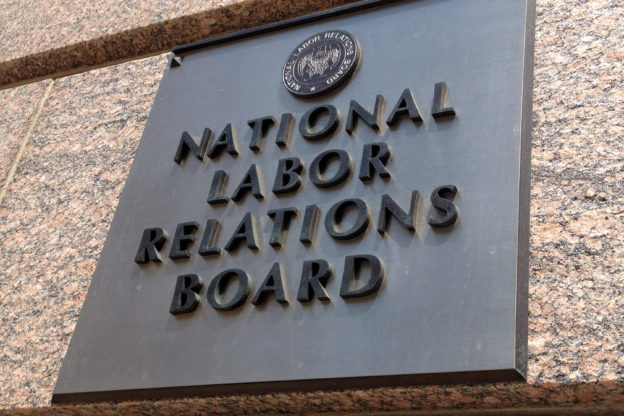
The National Labor Relations Board is charged with holding union elections whenever petitioners demonstrate that a sufficient number of employees in a particular workplace wish to become unionized. The NLRB’s “quickie election” rules have changed how this process plays out, and how employers should respond.

Slow Start to “Quickie Election” Rules

Seems like 2011 was a long time ago. That was when the National Labor Relations Board (NLRB) first proposed and implemented sweeping new rules designed to speed up the union election process. Business groups, including the U.S. Chamber of Commerce and others, sought to enjoin implementation of what became known as the “quickie election” rules by suing the NLRB in federal district court in Washington, D.C. Just two weeks after the rules became effective, a judge in that case invalidated the rules, finding that the Board had lacked a three-member quorum needed to adopt the rules. But the issue did not die there.

Read more >>

March 6, 2019

IRS Attempts to Tighten Rules for Business Meal Exclusions

By William Colgin and John Ludlum

William Colgin

Internal Revenue Code Section 119 (Code Section 119) allows employees to exclude from income the value of any meals furnished by or on behalf of their employer if the meals are furnished on the employer’s business premises for the convenience of the employer. Whether meals are furnished for the convenience of the employer is one of fact to be determined by analysis of all the facts and circumstances in each case. Treasury Regulation 1.119-1 provides that meals furnished by an employer to the employee will be regarded as furnished for the convenience of the employer if such meals are furnished for a substantial non-compensatory business reason of the employer.

Many companies provide meals to their employees, but the rules for excluding this benefit from income are complex and have detailed administration requirements. The taxpayer bears the burden of proving entitlement to such an exclusion. An employer who is claiming exclusion from income and wages for meals furnished to employees for the convenience of the employer must provide substantiation if requested concerning the business reasons. A recent IRS Technical Advice Memorandum issued on February 15, 2019, (“TAM 201903017”) underlines how difficult it can be to prove to the IRS administratively a substantial non-compensatory business reason and provides guidance for employers looking to claim the exclusion.

Read more >>

August 7, 2018

What Do Your Executives Have In Common With Seven-Figure Income College Coaches?

Beth Nedrow

By Beth Nedrow and Jeremy Ben Merkelson

Tax-exempt organizations may be surprised to learn of the practical impact of a statute enacted as part of the Tax Cuts and Jobs Act in December 2017. Section 4960 of the Internal Revenue Code immediately put in place restrictions on what it labels “excess” executive compensation. Some organizations initially concluded that Section 4960 would have little or no impact on them, but many are now finding that the rules have more bite than anticipated.

Section 4960 focuses on compensation paid by a tax-exempt organization to any “covered employee.” A “covered employee” is any person who was one of the organization’s five highest compensated employees for 2017 or any later taxable year. The surprising thing about this definition is that once a person is labeled a “covered employee” for any given year, they will remain in that category for the rest of their life. Read more >>

July 21, 2016

Wyoming’s New Workplace Safety Division: What Employers Need to Know

6a013486823d73970c01b8d207db1d970c-320wiBy Trey Overdyke 

In early May, the Wyoming Department of Workforce Services (DWS) announced the launch of a new unit of safety advisers offering free health and safety consultations to Wyoming employers upon request. Does the launch mean Wyoming employers will soon have an additional layer of occupational safety and health staff to worry about? In this article, I will try to read the tea leaves and offer my perspective.

Focus on Injury Prevention, Workers’ Comp Trends 

The DWS’s standards and compliance staff, in consultation with Governor Matt Mead, recently created the Workers’ Compensation Safety and Risk Unit (WCSRU). According to DWS Director John Cox, the new unit represents a “reorganization” that is designed to provide more employers safety consultations and offer the potential for lower workers’ compensation premiums.

The WCSRU is composed of nine recommissioned Wyoming Occupational Safety and Health Administration (WOSHA) consultation staff members. The WCSRU will focus on conducting workplace health and safety surveys without the risk of fines or penalties. The unit is also expected to offer detailed analysis of workers’ comp data to assist in identifying injury trends and developing best practices for preventing workplace injuries and illnesses.

Wyoming Has Highest Worker Death Rate in Nation

According to the U.S. Bureau of Labor Statistics (BLS), Wyoming had 37 workplace fatalities in 2014, the latest year for which statistics are available. With 13.1 fatalities per 100,000 workers, Wyoming has the highest worker death rate in the country. The national average for 2014 was 3.3 deaths per 100,000 workers. In Wyoming, transportation incidents accounted for the largest number of workplace deaths. Workplace violence, other injuries caused by persons or animals, and falls, slips, and trips caused deaths as well.

Because of the high fatality numbers, in 2015, legislators introduced bills designed to strengthen workplace safety regulations in Wyoming. Two of the bills would have increased penalties for violations of safety rules, including raising the maximum fine for a violation that causes a worker’s death to $250,000. Another bill would have allowed Wyoming to implement workplace safety rules that are stricter than similar federal safety rules, a practice that is currently barred. None of the bills passed.

WCSRU’s Role

As you know, WOSHA is responsible for enforcing occupational safety and health standards in Wyoming. WOSHA plans to adopt all federal Occupational Safety and Health Administration (OSHA) standards. WOSHA is permitted to adopt its own standards only if there are no corresponding OSHA standards. Wyoming has unique health and safety standards covering oil and gas well drilling, servicing, and special servicing as well as a standard for anchoring drilling rigs. WOSHA imposes the same record-keeping and reporting standards required by OSHA.

So the question is, how will the WCSRU interact with and affect the work of WOSHA staff? The new unit is expected to overlap with WOSHA in some ways. Both organizations’ staff will conduct health and safety surveys for employers to identify and remedy safety hazards in the workplace. However, according to the DWS’s news release, the WCSRU will bypass “time-consuming federal requirements, which add an extra layer of reporting and operational constraints . . . and limit the services [the] DWS is able to provide.”

Bottom Line

Several Wyoming agencies will be paying close attention to the WCSRU for the next few years. We expect to hear a number of success stories from Wyoming employers in many industries. However, read the fine print before initiating a consultation. If an employer and the WCSRU disagree on a hazard abatement, there does not appear to be a clear procedure to resolve the dispute. Further, if there is a dispute, you cannot eliminate the possibility that the WCSRU will refer the issue to WOSHA for enforcement.

We will share our experiences with the WCSRU as the unit works its way across Wyoming.

Click here to print/email/pdf this article.

July 13, 2016

EEOC Revises Its Proposal To Collect Pay Data Through EEO-1 Report

By Cecilia Romero

6a013486823d73970c01b8d204e441970c-320wiOn July 13, 2016, the U.S. Equal Employment Opportunity Commission (EEOC) announced that it has revised its proposal to collect pay data from employers through the Employer Information Report (EEO-1). In response to over 300 comments received during an initial public comment period earlier this year, the EEOC is now proposing to push back the due date for the first EEO-1 report with pay data from September 30, 2017 to March 31, 2018. That new deadline would allow employers to use existing W-2 pay information calculated for the previous calendar year. The public now has a new 30-day comment period in which to submit comments on the revised proposal.

Purpose of EEOC’s Pay Data Rule 

The EEOC’s proposed rule would require larger employers to report the number of employees by race, gender, and ethnicity that are paid within each of 12 designated pay bands. This is the latest in numerous attempts by the EEOC and the Office of Federal Contract Compliance Programs (OFCCP) to collect pay information to identify pay disparities across industries and occupational categories. These federal agencies plan to use the pay data “to assess complaints of discrimination, focus agency investigations, and identify existing pay disparities that may warrant further examination.”

Employers Covered By The Proposed Pay Data Rule 

The reporting of pay data on the revised EEO-1 would apply to employers with 100 or more employees, including federal contractors. Federal contractors with 50-99 employees would still be required to file an EEO-1 report providing employee sex, race, and ethnicity by job category, as is currently required, but would not be required to report pay data. Employers not meeting either of those thresholds would not be covered by the new pay data rule.

Pay Bands For Proposed EEO-1 Reporting 

Under the EEOC’s pay data proposal, employers would collect W-2 income and hours-worked data within twelve distinct pay bands for each job category. Under its revised proposed rule, employers then would report the number of employees whose W-2 earnings for the prior twelve-month period fell within each pay band.

The proposed pay bands are based on those used by the Bureau of Labor Statistics in the Occupation Employment Statistics survey:

(1) $19,239 and under;

(2) $19,240 – $24,439;

(3) $24,440 – $30,679;

(4) $30,680 – $38,999;

(5) $39,000 – $49,919;

(6) $49,920 – $62,919;

(7) $62,920 – $80,079;

(8) $80,080 – $101,919;

(9) $101,920 – $128,959;

(10) $128,960 – $163,799;

(11) $163,800 – $207,999; and

(12) $208,000 and over.

Read more >>

July 6, 2016

Union Remains Active In Health Care Industry Despite Withdrawing Initiative To Cap California Health Care Executive Salaries

By Steve Gutierrez

The Service Employees International Union (SEIU) – United Healthcare Workers West (UHW) has twice tried to get an initiative on the California ballot to cap the salaries of executives at nonprofit hospitals. The union recently withdrew its latest ballot initiative, ensuring that it will not appear on this November’s ballot.

SEIU Sought To Cap Private Executive Salaries 

Called the “Charitable Hospital Executive Compensation Act of 2016,” SEIU’s initiative sought to limit the annual compensation packages paid to chief executive officers, executives, managers, and administrators of nonprofit hospitals and affiliated medical entities in California. The cap would be set at the annual salary of the U.S. President, currently $450,000. All executive compensation would be included in the cap, including salary, bonuses, stock options, paid time off, housing payments, loan forgiveness, and reimbursement for transportation, parking, entertainment or similar benefits. It would not include the cost of health or disability insurance or contributions to health reimbursement accounts.

The measure called for penalties for hospitals and covered physicians groups who violated the salary cap. Such penalties would include fines, revocation of tax-exempt status, and having an additional person sit on the nonprofit’s board of directors to represent the state Attorney General.

Protect Taxpayers or Organizing Tactic?

Filed in October of 2015, SEIU’s latest initiative stated that its purpose was to ensure that assets held for charitable purposes were not used to enrich executives, managers, and administrators of nonprofit hospitals. SEIU also stated that the total compensation packages for hospital executives should be reasonable and not excessive “in light of the substantial public benefit that the State tax exemption for nonprofit organizations conveys.” In essence, the union touted that taxpayers should not have to subsidize the multi-million dollar paychecks of administrators at tax-exempt healthcare entities.

In the past, the SEIU filed other California initiatives, including one to limit hospital prices and another to put more rules around charity care that could be provided by nonprofit hospitals. In exchange for the SEIU withdrawing those initiatives, the California Hospital Association (CHA) agreed to a contract with the SEIU in 2014 called the Code of Conduct which was intended to put obligations and restrictions on the conduct of each party. The Code expired by its terms on December 31, 2015, but not before the CHA filed a complaint against the SEIU alleging that its initiative to cap executive salaries violated the Code.

As revealed in the arbitration order, in which the arbitrator found that the SEIU did in fact violate the Code, the goals of the SEIU in pushing its healthcare industry initiatives were to increase its membership by reaching agreements with hospitals that provide them access to healthcare workers, and by working together with the hospitals to get Medi-Cal fully funded, which would support more jobs for union members. The initiatives therefore appear to be intended to pressure the hospitals into helping the SEIU organize workers and expand its membership.

Even though this specific salary cap initiative has been withdrawn, we can expect that the SEIU-UHW will continue its pressure tactics in organizing workers in the healthcare industry.

Click here to print/email/pdf this article.